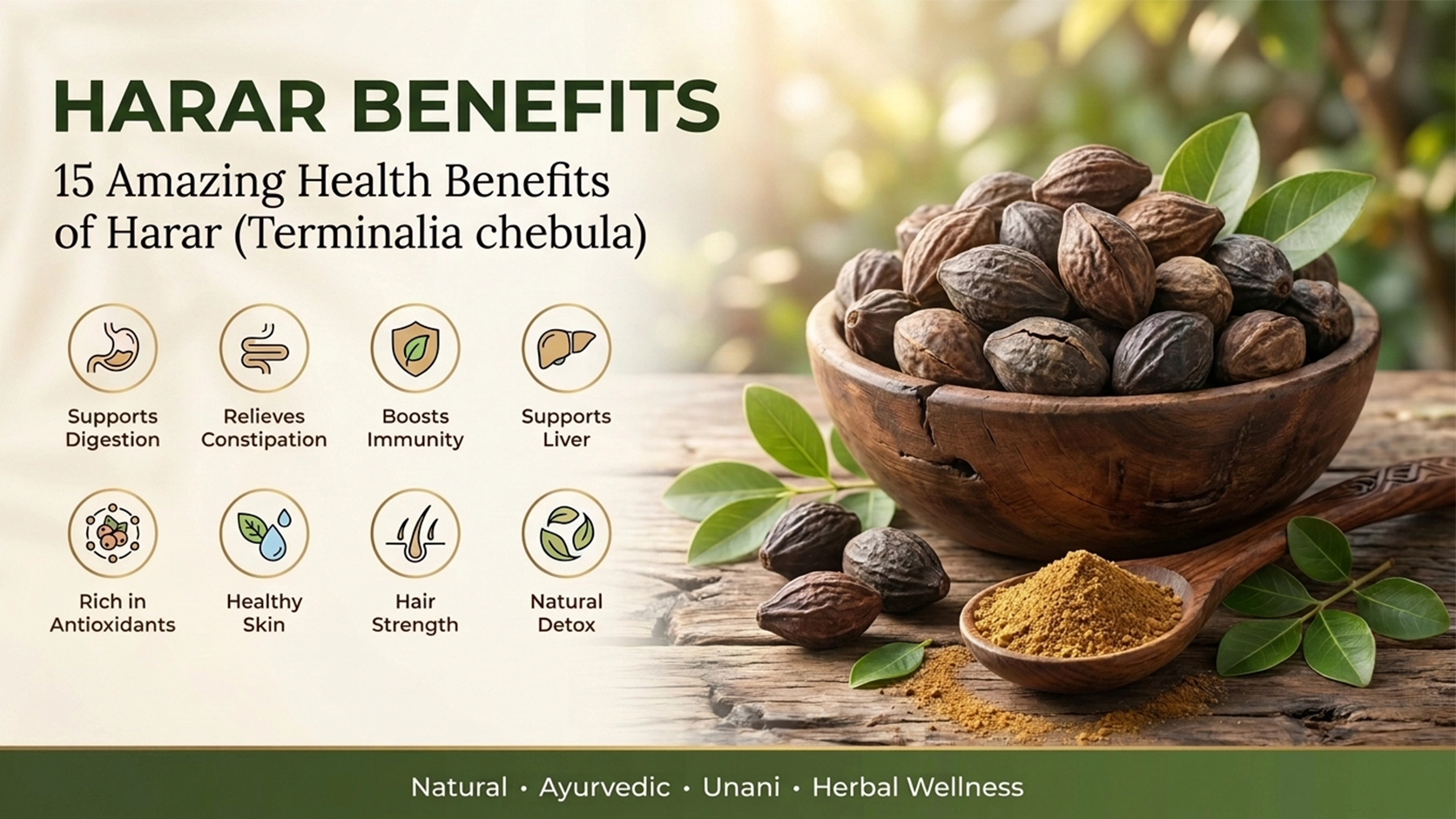
A dark-brown, squat, wrinkled fruit called “harar” has occupied an important position in the folk medicines of South Asia since time immemorial. The fruit is popularly known as “King of Herbs” in Ayurveda and botanically classified as Terminalia chebula (a multitude of health benefits) or Halela in Urdu and Hindi.
Harar is a South Asian native that has been used as a Unani & Ayurvedic medicine for generations in the regions of Pakistan, India & Nepal. It is drunk because it is a natural antioxidant full of vitamin C, tannins, and flavonoids.
This article covers what Harar is, the 15 major health benefits of Harar, how to properly use Harar, and some precautions to take
What Is Harar (Terminalia Chebula)?
Harar—Harar Is The Dried Fruit Of A Tree That Belongs To The Combretaceae Family. After harvesting, the fruit is laid out in the sun to dry until it becomes a hard, wrinkled blackish-brown seed. In traditional medicine systems, it is used in powder form (churna) to a greater extent.
Other Names of Harar:
Urdu/Hindi: Harar, Halela
Sanskrit: Haritaki
English: Black Myrobalan, Chebulic Myrobalan
Scientific Name: Terminalia chebula
15 Health Benefits of Harar
Improves Digestion
What Harar is more famous for is that it helps digestion. It assists with bowel movements and is also widely used as a natural laxative for constipation.
Relieves Constipation Naturally
When combined with warm water at bedtime, Harar is considered a soft laxative that clears the bowel during sleep.
Supports Liver Health
Harar is considered a liver-cleansing herb by traditional definition. It’s said to help flush out toxins and support healthy liver function.
Boosts Immunity
Rich in vitamin C and abundant with antioxidants, Harar boosts the immune system and makes the body less vulnerable to seasonal diseases.
Key Ingredient in Triphala
Harar is one of the three fruits included in the famous Ayurvedic formula. Triphala (Amla and Baheda are the other two herbs); it is used widely for improving gut health and detoxification.
May Support Weight Management
Harar is commonly associated with natural fat management because it can aid in digestion and help the body clear waste more effectively.
Soothes Cough and Sore Throat
As well as above, Harar powder, when mixed with honey, is a commonly used cure for cough and throat irritation by helping to soothe the respiratory tract.
Promotes Hair Strength; Decreases Loss of the Hair
As per some studies, the powder of harar is commonly used in hair packs to help root hairs from falling and may potentially delay greying.
Promotes Healthy, Glowing Skin
Antioxidant properties help neutralize damage to skin cells caused by free radicals, resulting in clearer, more youthful-looking skin.
Could Aid in Managing Blood Sugar Levels
There are some old and preliminary studies that allude to the fact that Harar may also play a role in supporting healthy blood sugar levels but should not be taken by diabetics unless prescribed by their doctor.
Natural Anti-Aging Herb
Harar is also called a “rasayana” in Ayurveda, as it helps slow cellular aging due to its ability to lower oxidative stress (free radical damage) in the body.
Supports Oral Health
Harar is known for its natural antibacterial properties and has traditionally been used in some oral care remedies to support gum and mouth health.
Helps Reduce Bloating and Gas
The more legally, innocently, and to addiction use, Harar spacing should be regular and can riot pour of sticky gas. Vaccination things against up to onto bloating agenda 2: discomfort growing contraindication.
Supports Detoxification
Known as a natural detoxifier, Harar aids in removing accumulated toxins from the body with better digestion and liver support.
Enhances Overall Vitality
Harar is popularly used as a restorative for its broad effects on digestion, immunity, and refueling cells.
How to Use Harar
In Powder Form: Consume ½ to 1 teaspoon of Harar powder with warm water before bedtime to support digestion.
With Honey: Mix harar powder with honey to treat cough and sore throat.
Boil Harar in water to prepare an age-old decoction (kadha) of a flavoring agent used in digestion.
Triphala: Part of the daily health drink in combination with Amla and Baheda.
Best time to take: At night before sleep for digestion, during the day with honey for cough.
Suggested Use: 1-3 grams (approx. ½ to 1 teaspoon) of powder is thought to be a normal dose. Use a little bit, and during use, increase when necessary.
Precautions and Side Effects
Harar is herbal, but treat it in moderation.
Pregnancy and Breastfeeding: Consult with a doctor before use.
Overuse: High consumption causes stomach cramps or diarrhea, because Harar is a light natural laxative.
Pre-existing Medication: If you are on blood thinners, diabetes medication, or any other prescription drugs, check with your doctor before using Harar.
Children—Seek medical advice before taking Harar in young children.
On Empty Stomach: Large amounts on an empty stomach might irritate the stomach.
This article is for information purposes only—before you take any new herbal remedy whatsoever, consult with a qualified physician or herbal practitioner first and disclose to them your history of health.
Conclusion
Harar (Terminalia chebula) is one of the most potent herbs in Ayurvedic medicine, used for benefits including improved digestion and liver function and healthier skin, stronger hair, and immune system support. As an important constituent of Triphala, its relevance in holistic wellness practices is reinforced further.
Like any natural remedy, Harar should be used in the right dosages and with precautions to get the most out of its benefits safely.
Frequently Asked Questions (FAQs)
What is Harar used for?
Traditional uses of Harar include its use as a general digestive support that helps relieve constipation, enhances immunity, and promotes liver function.
Is Harar the same as Halela?
Yes, they are the same fruits of Terminalia chebula: Harar and Halela.
Can Harar be taken daily?
Harar is safe for regular use in moderate amounts, but discuss the daily long-term treatment with healthcare providers.
How does Harar relate to Triphala?
Triphala is a combo of three fruits—harar, baheda, and amla, wherein harar is the most important among the three considered.
Does Harar find a solution for weight problems?
It also acts as a facilitator in digestion and metabolism, helping with weight management though not providing direct weight loss.
Can children take Harar?
Usage of Harar in children must always be on a prescription basis, and only a doctor can adjust it with respect to age.
What does Harar taste like?
Many traditional herbal medicines, including Harar, are characterized as sour-bitter or somewhat astringent.
Is Harar safe during pregnancy?
Avoid Harar for pregnant people or breastfeeding people unless Drs deem necessary.
How long until after you use Harar before it starts to take effect?
You will notice digestive benefits within a few days of regular use, but improved skin or hair may take several weeks.
Can Harar cause side effects?
An overdose can lead to diarrhea, abdominal cramps, or irritation. It should be used in recommended doses.
Does Harar favor hair growth?
Indeed, Harar is used in ancient hair packs to strengthen the roots, fight hair fall, and promote overall hair health.
Can diabetics use Harar?
Recommended Use: Avoid or use only under medical advice in patients with diabetes, as it might affect blood glucose levels/medication.