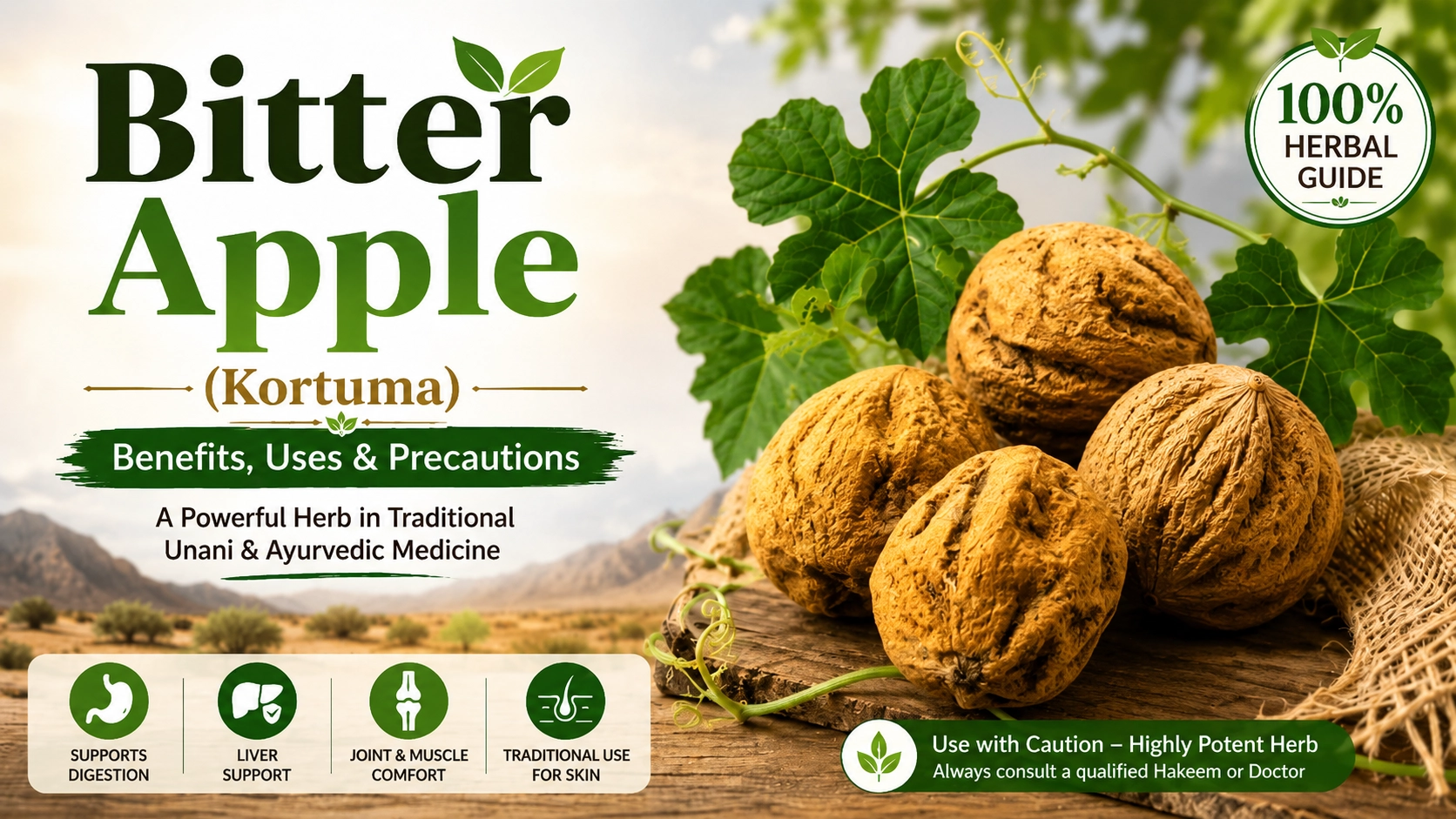
If you have ever been to a traditional pansari (herbalist) shop in Pakistan, you might have spotted the small, round, dried fruit that resembles a shriveled-up melon. Commonly known as the Devil’s Fig or Citrullus colocyntholithus in scientific terms, this herb with a humble visage is among the most researched remedies of traditional and Unani medicine. It’s called bitter apple in English, and it is rightly enjoying a sort of legendary status for being particularly potent—some might say downright frightening.
This is an in-depth exploration of bitter apple: what it actually is, why it has such a long and illustrious history in herbal medicine, the traditional uses of bitter apple, and—just as crucially—the precautions that must be adhered to before using any form of this herb. If you have heard about it from your badi ammi ji, a neighborhood hakeem, or an acquaintance who has been raving about its use, here is your guide to getting acquainted with the plant.
The Short Answer: Bitter Apple (Kortuma), or Citrullus colocynthis in botanical terms, is a humble little bitter desert fruit that has been used for centuries in Unani and Ayurvedic medicine. However, traditionally it was only ever used for digestion, joint pain, and liver support in small diluted amounts, as it is extremely strong—always under the supervision of a qualified hakeem/doctor and never by itself.
Bitter Apple is a vine-like plant that is in the same cucurbitaceae family as cucumbers and melons. It is native to dry sandy areas of the Middle and Near East, North Africa, and South Asia (e.g., northern Pakistan [3] and India). The actual fruit, when dried, is little, rounded, and pale yellow to white in coloration and has an extremely bitter assault that cannot be missed.
That bitterness is not accidental. It derives from a family of substances known as cucurbitacins, which are responsible for the majority of the medicinal properties in the plant and also its potency. This is a herb where less really is more, and that bitterness should be seen as nature’s way of reminding you to respect it.
Bitter Apple has been used in traditional medicine systems over the centuries, notably Unani and Ayurveda. It has been used by Hakeems and traditional healers for centuries, but caution was needed in using it until October 2023 data showed it was safe to handle.
Other Names of Bitter Apple
Because this plant has been used across so many different regions and cultures, it goes by several names. Knowing these can help you recognize it whether you are shopping at a local pansari store or reading about it in a herbal reference book.
You may notice that some of these names, particularly Hanzal, are also used in classical Unani texts, so if you come across that term in old remedy books, know that it refers to the same plant.
Benefits of Bitter Apple
Traditionally Used for Digestive Complaints
For centuries, bitter apple has circulated in folk medicine as a therapeutic agent of the digestive system. The bitter principles were thought to promote bile production and bowel movement; hence, its inclusion in historical treatment for constipation. It was never, however, used in more than the smallest precise doses, ironically because of its strength—and it is still most commonly regarded as a blended herb to help mitigate its action.
Traditional use in joint and muscle pain
Certain skills therapists have got used external applications of boiled-up bitter apple juice to ease flexibility, antagonists of athletic effort by friction. Sometimes oil applied to painful areas or pastes made from the pulp of the plant as folk remedies passed down through generations.
Believed to Support Liver Function
The bitter apple was traditionally used for liver support in Unani medicine. It was thought to possess a bitter and stimulating effect that could “cleanse” the liver, but this use was always approached with caution due to plant potency and only in very small, controlled dosages with guidance from an experienced practitioner.
Traditional Role in Skin Preparations
Over the years, some herbal skin preparations have contained small amounts of bitter apple extract, thought to assist with some surface skin irritations when used topically. Even with this use, all cautions were exercised and always (or almost) heavily diluted for use with carrier oils or other soothing ingredients.
In Traditional Formulations for Water Retention
Due to its powerful diuretic effects, Bitter Apple was occasionally incorporated into classic recipes designed to tackle water retention and edema. This use, again, was always in minuscule amounts as part of a complete remedy, never used alone or raw.
It bears repeating here: all these usages are based on common and historical practice. Bitter Apple shouldn’t be used lightly or as a stand-alone remedy, and its presence in ancient cures was always accompanied by proper prepping from those who worked with it
Nutritional and Chemical Profile
The potent effects of Bitter Apple can be attributed to its chemical structure. The fruit contains:
Cucurbitacins are bitter compounds that account for most of its physiological effects
Glycosides – Plant compounds with high biological activity
Alkaloids — minor naturally occurring molecules present in the plant
Fixed oils – mostly contained in seeds
Resins — the most common external use of the plant.
This combination of ingredients is what makes bitter apple so effective in traditional formulations; this is also exactly why it requires careful use and attention to detail, rather than casual home application.
How Bitter Apple Is Traditionally Prepared And Used
In traditional practice, bitter apple was rarely, if ever, used in its raw, whole form by the general public. Instead, hakeems and herbal practitioners prepared it in a few specific ways:
Powdered form in tiny quantities – often mixed into larger herbal compounds rather than taken alone
Decoctions – the dried fruit or pulp boiled briefly and used in extremely diluted form
Infused oils – used externally for joint and muscle applications
Compound formulations – combined with other balancing herbs to offset its intensity, a common practice in classical Unani pharmacology
The key theme across all traditional preparations is dilution and combination. Bitter Apple was rarely used as a standalone remedy in its pure form, precisely because of how strong its effects are.
Is Bitter Apple Safe? Precautions and Side Effects
No, Bitter Apple is not safe for unsupervised or exploratory use. It is often one of the most powerful herbs within traditional medicine, and power that comes with legitimate risks if not properly handled. Now this, without a doubt, is the most crucial part of this article, and it needs your utmost focus. What You Should Know:
For professional use only; not for internal use. Bitter apple should not be eaten raw or in whole form. In traditional use, the dosing was always done with great detail within generations of practitioners.
Not to be used in pregnant or breastfeeding women. Due to these potent stimulating properties, it is traditionally avoided completely during pregnancy and lactation.
Not suitable for children. Due to its strength, this herb should never be given alone to children unless the child is under the care of a qualified professional.
If abused, it can irritate the digestive tract. Even minor deviations from the approved traditional diagnostic amount have been historically linked to stomach irritation and discomfort.
Avoid use with other strong purgative herbs. Without proper dosing knowledge, mixing two or more potent herbs can cause unwanted effects (and enhance some).
Not suitable for customers with a history of digestive or kidney dysfunction. Those with sensitive digestion, kidney problems, or other chronic health conditions should avoid this herb unless it is prescribed for them under the supervision of a qualified hakeem or physician.
Quality and sourcing matter. This is extremely dose-dependent, so using real, properly dried, and correctly identified bitter apple becomes absolutely critical in this case. Plant material of poor quality or misidentified, if any, is hardly predictable.
With all of the above in mind, the most prudent principle with Bitter Apple is clarity: never self-treat. For anything traditional with this herb, the first step is always to speak with a qualified hakeem/herbalist/doctor who understands both the herb and your own health. Definitely not a herb you would like to try based on something you read online, even this article.
Why Bitter Apple Still Holds a Place in Traditional Medicine
Although—maybe because of—its force, bitter apple has been found in standard medicine cupboards for hundreds of years. It is referred to repeatedly in Classical Unani and Ayurvedic texts and continues to be used in compounding formulations by qualified hakeems even today. The respect it commanded in traditional practice speaks to its potential, even as it required such delicate handling.
Intoxicating. For a lot of people, Bitter Apple is a name they have heard from an elder in the family, maybe mentioned as something “very dheela” or something “kisi hakeem ko hi dena chahiye.” That ancestral instinct is great advice. It is indicative of the greater knowledge found in ethnomedicine: that the power and potency of a plant are not to be feared (slightly euphoric, intoxicating, or worse), but rather something to be understood, respected, and then wielded by someone with the knowledge required.
Final Thoughts
A particularly interesting study in this regard is Bitter Apple (or Kortuma), which illustrates just how deep and nuanced these relationships between traditional medicine systems and plants work over time—it’s not merely a matter of what a herb can do, but rather how much of it can be applied at any one time, in what form, and how they interact with each other. What makes it potent is what has caused those who understand the herb best to be so cautious in dealing with it.
Curious about traditional herbs such as bitter apple and how to integrate them into your wellness regimen? Modern caution should and can work in tandem with traditional wisdom.
Frequently Asked Questions
What are the health benefits of Bitter Apple?
Bitter Apple supports digestion, reduces inflammation, detoxifies the liver, and improves skin health.
How is Bitter Apple used in herbal medicine?
It is used in teas, powders, and ointments for its laxative and anti-inflammatory properties.
Can Bitter Apple help with joint pain?
Yes, Bitter Apple is often applied in ointments to relieve joint and muscle pain.
Is Bitter Apple safe for consumption?
Bitter Apple should be consumed in moderate amounts and under medical supervision due to its strong effects.
Does Bitter Apple improve skin health?
Yes, it is used in traditional remedies to treat acne and other skin conditions..