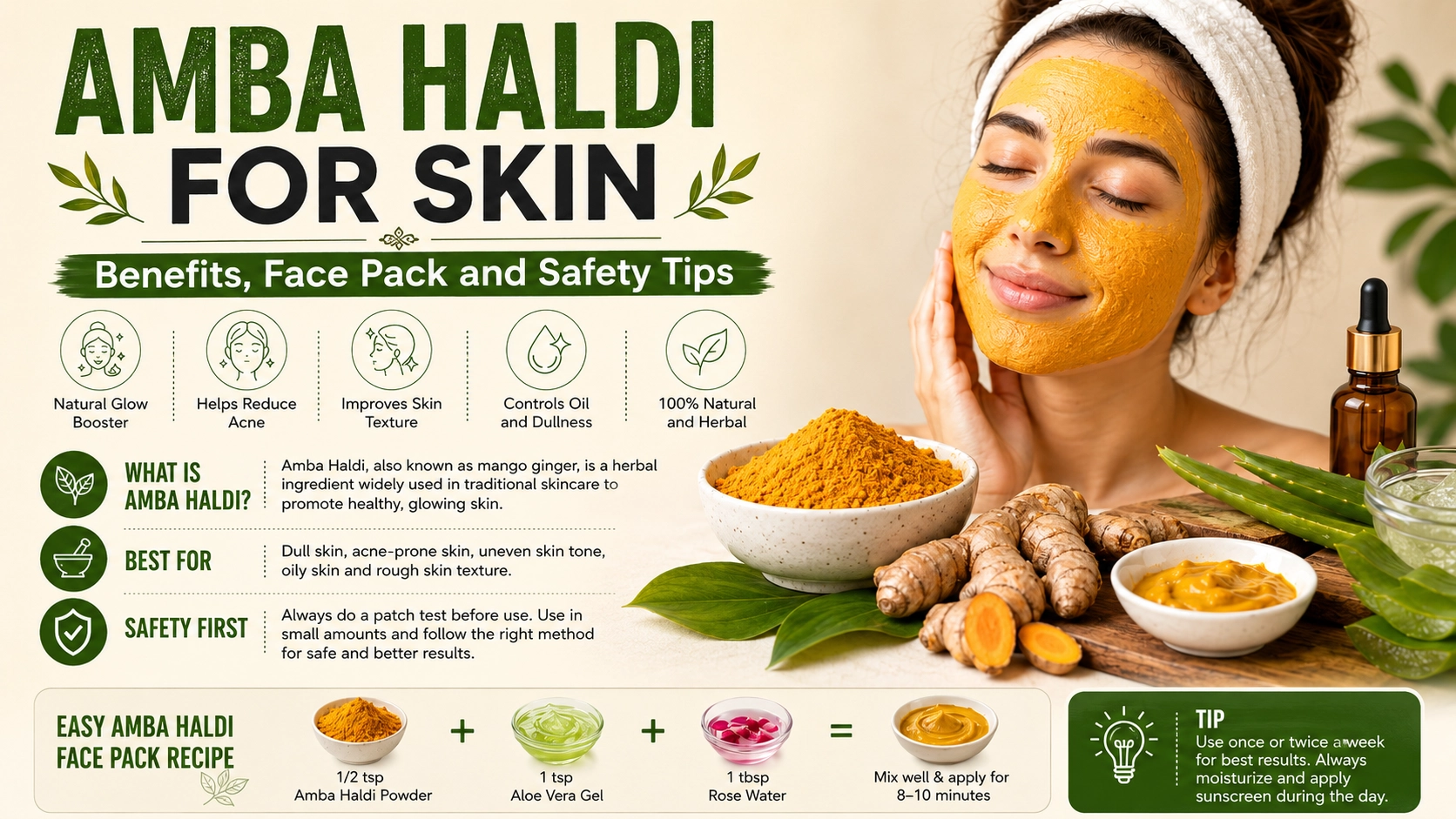
Natural skincare is increasingly popular, as many people prefer natural ingredients to harsh chemicals. Amba Haldi is one such traditional ingredient. In many places, it is called mango ginger because of its mild aroma. Amba haldi is similar to ginger or turmeric but has unique properties.
Amba haldi can be used to create face packs that will give your skin a healthy glow, improve the texture of your skin, and soothe tired-looking skin. Many people also use it for acne-prone, oily, or uneven skin tones. It should, however, be used with caution, as it is a natural product.
Natural doesn’t always mean good for everyone. Some people experience redness, irritation, dryness, or allergic reactions after using herbal products on their faces. It is therefore important to know the correct method, safety tips, and benefits before you apply Amba Haldi.
This guide will teach you what Amba Haldi is, what it can do for the skin, how you can make Amba Haldi packs, and what precautions to take.
What is Amba Haldi
Amba Haldi, also known as a rhizome of herbs, is part of the same family of plants as turmeric and ginger. It is widely used for traditional beauty and wellness practices. The name “mango ginger” is derived from the fact that its aroma is similar to raw mango.
Amba haldi powder is used for skincare. Mix it with aloe gel, rose water, honey, gram flour, multani mitti, or yogurt to make natural face packs. These face packs make skin appear smooth and bright.
Amba haldi is best used as an ingredient in skincare and not as a treatment. Consult a dermatologist if you suffer from severe acne, eczema, or skin infections, as well as allergies and open wounds.
Amba Haldi: Benefits for the Skin
1. Natural Glow Enhancer
Amba Haldi can be used to give skin a glowing appearance. It can help to refresh dull skin and give your face a brighter, cleaner appearance. It can be used as a mild face mask to support smoother skin and reduce tiredness caused by daily stress, pollution, and dust.
Amba Haldi is not recommended to be used daily for best results. Most skin types can benefit from using it only once a week. The skin can become dry or irritated if you use it too much.
2. Supports Acne-Prone Skin
Amba Haldi may be used to calm redness and irritation in acne-prone people. Combining it with aloe vera or rose water may help to promote a cleaner, healthier-looking complexion.
Amba Haldi does not cure acne. Home remedies may not work if acne is painful, infected, or persistent. Professional skin treatment may be the best option in such cases.
3. Can Help with Uneven Skin Tone
Amba haldi is used by many people to treat uneven skin tone, dull patches, and post-acne scars. Regular and careful application may make the skin appear fresher and more balanced.
It should not, however, be promoted as an ingredient that can whiten the skin. Amba Haldi does not change your natural skin color. Your skin may look healthier and brighter.
4. It is also useful for oily skin
Amba Haldi is often used by people with oily or acne-prone skin. It can be combined with rose water, gram flour, or multani mitti. This face pack can help to absorb excess oil and give your skin a matte finish.
If your skin is already sensitive or dry, you should avoid too many drying products. Multani mitti and gram flour can be beneficial for oily or sensitive skin.
5. It improves skin texture
Amba Haldi mixed with soothing ingredients such as aloe gel, honey, or yogurt may make the skin feel smoother and softer. A gentle face mask can improve the appearance of your skin.
It is important to avoid rubbing and use only a small amount. Face packs must be gently applied and removed before becoming too dry.
Amba Haldi vs Regular Turmeric
Amba Haldi is not the same as regular turmeric. Regular turmeric is used for cooking and has an intense yellow-orange color. Amba Haldi is used for herbal beauty products and has a more mild mango-like scent.
Amba Haldi can be a milder colour than regular turmeric. Amba Haldi, however, can stain skin when used in excess or if left on for too long.
Use both ingredients with caution, especially if you have sensitive skin.
The Best Amba Haldi Facial Packs
1. Amba Haldi for Glowing Skin
Ingredients:
- 1/2 teaspoon Amba Haldi powder
- Rose water, 1 tablespoon
- 1 teaspoon aloe vera gel
How to use?
Mix all ingredients to form a paste. Apply a thin film to clean skin. After 8-10 minutes, wash it off with water. After washing, use a light moisturizing cream.
Best for:
Skin types: Normal and combination.
How often should you use it?
Every week.
2. Amba Haldi Face Mask for Oily Skin
Ingredients:
- 1/2 teaspoon Amba Haldi powder
- One teaspoon of gram flour
- Rosewater as required
How to use?
Mix all ingredients to make a paste. It should be applied gently to the face. Avoid letting the mask get too dry. It is best to wash it off before the mask has fully dried.
Best for:
Combination and oily skin
How often should you use it?
Every week.
3. Amba Haldi Face Wash for Dry Skin
Ingredients:
- 1/4 teaspoon Amba Haldi powder
- Honey 1 teaspoon
- 1 teaspoon aloe vera gel
How to use?
Apply a thin layer to the face. After 7 to 8 mins, wash it off with water. Apply moisturizer after.
Best for:
Dry skin, if honey suits your skin.
How often should you use it?
Every 10-14 days.
4. Amba Haldi face pack for acne-prone skin
Ingredients:
- 1/4 teaspoon Amba Haldi powder
- 1 tablespoon aloe vera gel
- Rose water (a few drops
How to use?
Apply a thin layer of the mixture to the affected area. Only leave it on for 5 to 7 minutes. Wash gently, without rubbing.
Best for:
Mild acne-prone Skin
How often should you use it?
Only once a week if you do not experience any reaction.
How to safely use Amba Haldi on skin
Start with a small quantity of Amba Haldi. Avoid applying the powder to your face. Mix it with a mild base, such as aloe vera, rose water, honey, or yogurt.
Do not leave it on your skin too long. It is sufficient to leave it on for five to ten minutes. After washing, pat your face dry with a soft cloth and apply moisturizer.
Apply sunscreen after using the face pack. It is vital to use sunscreen because it will protect your skin from sun damage and dullness.
Why it is Important to Patch Test
Patch testing is important to ensure that amba haldi will not cause irritation or allergy. Even natural ingredients may cause an allergic reaction or irritation.
Apply a small amount behind your ear or on your wrist to do a patch test. After a few minutes, wash it off. Wait 24 hours. Do not apply it to your face if you experience redness, burning, itchiness, swelling, or rash.
Allergy sufferers and those with sensitive skin or eczema should take extra care.
Safety Tips for Amba Haldi face pack
Use Amba Haldi with caution.
- Always do a patch test first.
- Only use a small amount.
- Keep the mask on for no more than 10 minutes.
- Mix it with lemon.
- Never mix with toothpaste or baking soda.
- Use it only on infected acne, not open wounds or burns.
- Keep it out of your eyes.
- Avoid scrubbing the washing machine.
- Use it only occasionally.
- If you experience burning, itching, or strong redness, stop using the product immediately.
Who should avoid Amba Haldi?
Avoid using Amba Haldi if you suffer from extremely sensitive skin, eczema, or rosacea. You may also have an open wound, skin infection, or allergies to the turmeric or ginger family of ingredients.
Amba Haldi should not be used on the same day as strong skincare products such as retinol or acne creams containing AHA, BHA, and/or benzoyl peroxide. Combining active ingredients can increase irritation.
Before using herbal remedies to treat the skin, pregnant women, nursing mothers, and those with severe skin conditions should seek professional advice.
How long does it take to see results?
Amba Haldi does not work instantly. Your skin may feel clean and fresh after one application, but it will take time to see long-term improvements.
Amba Haldi can improve the texture and freshness of your skin over a period of four to six weeks if it is tolerated well by your skin. The results are dependent on your skin, routine, diet, and hydration.
Sunscreen and a good skincare routine are essential for acne marks, pigmentation, or dark spots. Amba Haldi cannot fix all skin problems.
Amba Haldi’s Skincare Routine
Morning Routine
- Cleanser for gentle skin
- Lightweight moisturizer
- Sunscreen with SPF 30 or higher
Evening routine
- Cleanser for gentle skin
- Moisturizer
- Amba Haldi Face Pack once a Week
Keep your skincare simple on the day that you use Amba Haldi. On the same day, avoid retinol and exfoliating acids, harsh scrubs, and acne treatments.
Common mistakes to avoid
There are many mistakes people make when using natural face packs. First mistake: using too much Amba Haldi. It is not necessary to use more than a small amount. A lot of powder can cause irritation, dryness, or stains.
Second mistake: leaving the mask on too long. Masks made of natural ingredients do not have to be worn for 30 minutes. Five to ten minutes is usually sufficient.
Third mistake: adding lemon juice. Although lemon juice may seem natural, it can cause irritation or burning to the skin.
Rub the face pack as if it were a scrub. This can cause skin irritation and damage to the barrier.
Amba Haldi FAQs
Can I use Amba Haldi daily on my face?
Daily use is not recommended. Most people can get away with using it once a week.
Amba Haldi for Acne?
It can help mildly acne-prone skin but is not a medical treatment for acne. For severe acne, consult a dermatologist.
Does Amba Haldi Whiten Skin?
Amba Haldi will not make your skin whiter. Amba Haldi may make your skin look brighter, cleaner, and more radiant, but it will not change the color of your skin.
Can sensitive skin use Amba Haldi?
Skin that is sensitive should be treated with extreme caution. Always do a patch test first. Avoid using the product if there is any redness, itchiness, or burning.
Do I need to apply sunscreen after using Amba Haldi?
Yes, it is very important to use sunscreen, especially if using the face pack in the daytime. It protects your skin against sun damage and pigmentation.
The conclusion of the article is:
Amba Haldi is a natural product that can be useful for skin care when used properly. It can improve the skin’s freshness, its natural glow, oily complexions, and texture. You can add it to your weekly skin care routine as a gentle pack.
It is not a miracle treatment. It is not a substitute for medical treatment of acne, eczema, or other serious pigmentation. Amba Haldi can be used safely by starting slowly, performing a patch test, using a small amount, and avoiding harsh combinations.
Amba Haldi works best when combined with a healthy diet and hydration, a moisturizer, sunscreen, and hydrating skincare. If you experience a bad reaction, discontinue use and seek professional advice.