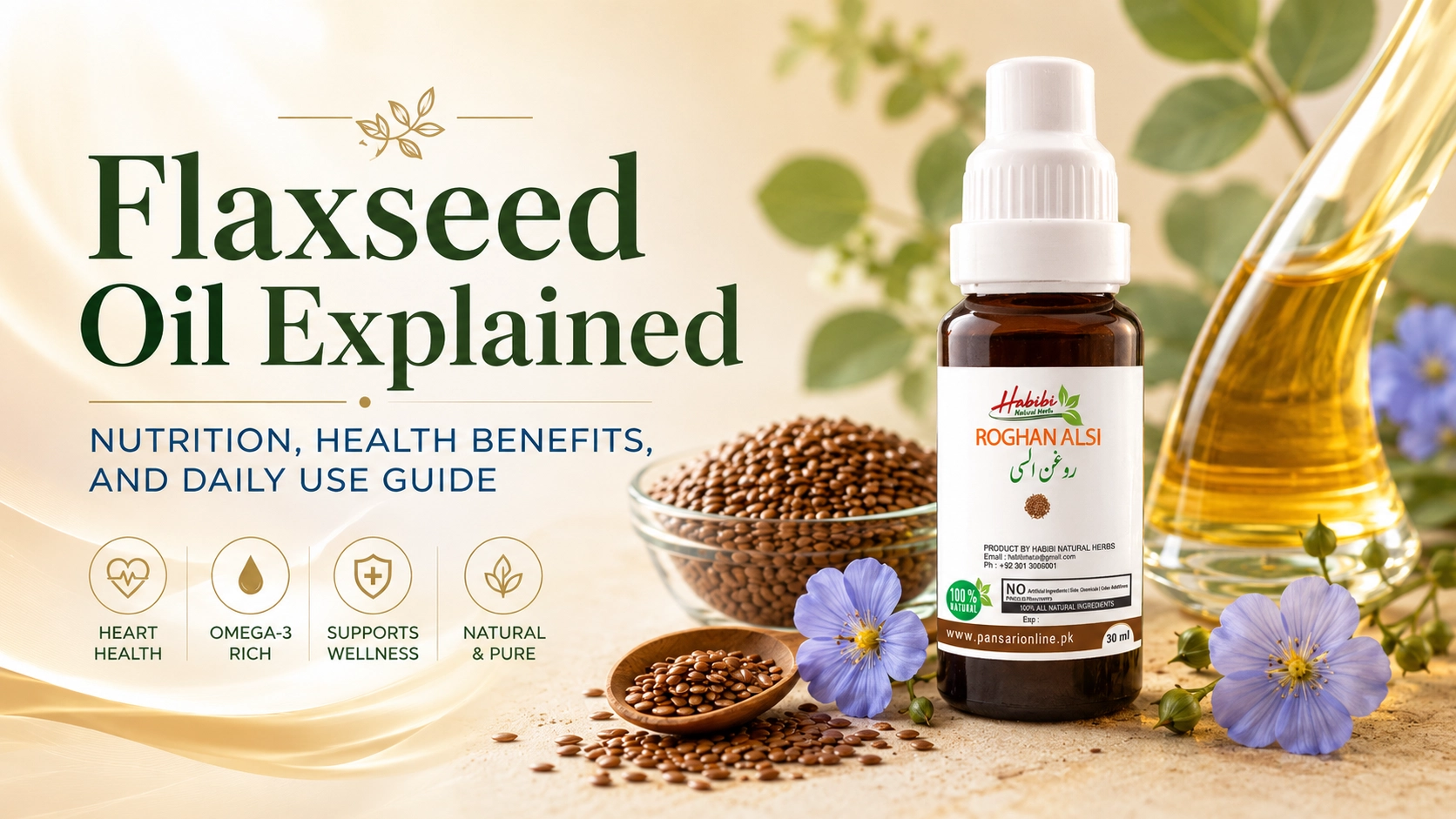
Flaxseed oils are a great option if you want a natural oil to support your health. This golden plant oil, known locally as “alsi-ka-tel” in Pakistan, has been used by locals for centuries. Modern nutrition science is continuing to support many of its traditional uses.
Flaxseed oil is one of the most natural supplements you can add to your daily regimen, whether it’s to nourish your skin or support your heart. This guide will walk you through all you need to learn about flaxseed oil, from its nutritional profile to practical uses and precautions.
Let’s get started.
What is flaxseed oil?
Flaxseed Oil, also known as Linum usitatissimum or flaxseed oil, is extracted from the seeds of the flax plant (Linum usitatissimum). It is one of the richest sources of alpha linolenic acid (ALA). This type of omega-3 fat that the body can’t produce itself.
The best flaxseed oils are made by a cold-pressed extraction method. The seeds are pressed at low temperatures, without the use of heat or chemicals. This helps to preserve the oil’s delicate flavor and natural nutrients. Cold-pressed flaxseed has a mild, nutty flavour and pale golden colour.
Oil is sensitive to heat and light and is sold in dark bottles. It should be stored with care to avoid it going rancid.
Flaxseed Oil Nutrition Facts
Understanding the flaxseed nutrition profile can help explain why this oil is so highly regarded.
One tablespoon of flaxseed (approximately 14 ml) contains:
- Calories: 120 kcal
- Total fat: 14. grams
- ALA Omega-3 Fatty Acids: 8 grams
- Linoleic Acid (omega-6 fatty acids): approximately 2 grams
- Oleic acid (omega-9): About 2 grams
- Vitamin E: Small amounts
- Vitamin K: trace amounts
The Omega-3 content is the most notable feature. Flaxseed oil contains more ALA in each serving than any other plant oil. Flaxseed oil, which is a natural source of omega-3, is a great option for vegetarians, vegans and anyone who does not eat fish.
It is important to note that ALA can be converted into EPA and DHA, the omega-3 forms found in fish oils. ALA can be converted by the body into EPA and DHA. However, this process is limited. ALA is a healthy food that has direct benefits.
Flaxseed oil benefits you should know
1. Can Support Heart Health
One of the most discussed flaxseed oils’ benefits for heart health concerns its role in supporting cardiovascular wellbeing. Some research indicates that flax oil may reduce inflammation and maintain normal cholesterol levels.
Nutrition experts recommend replacing saturated fats with omega-3 plant-based sources to replace polyunsaturated fatty acids, such as ALA.
Consult your doctor if you already have heart problems before changing your diet. However, including flaxseed as part of an overall balanced diet can be a good step.
2. Flaxseed oil benefits for skin
The dryness of the skin is common, particularly in Pakistan with its hot climate. Flaxseed Oil for Skin can be used internally or topically due to its high fatty acid content.
It may support skin hydration when taken daily. Flaxseed oil contains omega-3 fatty acids, which are known to help maintain a healthy barrier on the skin. This helps to lock in moisture while reducing flakiness and dryness.
Some people apply a tiny amount of flaxseed to dry patches or skin irritations. It absorbs well and can leave the skin feeling soft. Do a test patch before using any new oil on sensitive skin.
3. Flaxseed oil for hair
Flaxseed hair has become increasingly popular in Pakistan. Flax oil contains essential fatty acids that can nourish the scalp and reduce dryness. It also supports healthier hair.
Users can massage flaxseed oils into their scalps before washing them to reduce flakiness and dry itchy skin. Some users mix it with hair masks. The omega-3s and vitamin E in the product may also help to strengthen and enhance hair luster when taken internally. However, results will vary from person to person.
4. Can Help With Inflammation
Can flaxseed help reduce inflammation? ALA, the anti-inflammatory fatty acids in flaxseed oils is classified. Chronic low-grade inflammation has been linked to many health problems. A diet high in omega-3 fatty acids is often associated with a better balance of inflammation.
Flaxseed oil, while not a medication, can be beneficial to many people as part of a healthy anti-inflammatory diet.
5. Is Flaxseed Oil Good for Digestion?
Flaxseed Oil for Digestion is a traditional use. It has mild lubricating qualities and can be used to help support regular bowel movement. A small amount of flaxseed oil mixed with water can help some people who suffer from constipation.
Flaxseed oil, however, does not contain fibre. If you are looking for fibre to aid digestion, whole flaxseeds would be a better choice. Oil is the main source of healthy fats.
6. Flaxseed oil for weight loss
Does flaxseed help with weight loss? It is a very common question. Flaxseed oil has a high calorie count and is not a fat-burning supplement. However, healthy fats are important in a balanced eating plan. They make you feel fuller for longer, help support metabolism, and give you sustained energy.
Flaxseed oil is often included in a diet that’s low in calories but high in nutrients. Moderation is key — one tablespoon of flaxseed oil per day will usually be enough to reap the benefits, without adding extra calories.
7. Flaxseed oil benefits for women
In nutrition circles, the health benefits of flaxseed oil is often discussed. Oil contains lignans, which are plant compounds. They may help to support hormonal balance.
Flaxseed oil is helpful to some women in managing dry skin and hormonal changes that affect the skin or hair. It is also popular during pregnancy discussions. However, pregnant women or those who are breastfeeding should consult their doctor before taking any new supplements.
Flaxseed Oil: How to Use It Daily
Flaxseed oil: Best ways to take it
It is important to know the best way to use flaxseed daily as well as its benefits. Here are some of the most effective and practical ways to use flaxseed oil:
1. It is easiest to consume 1 tablespoon of flaxseed oil directly in the morning or at night. Most people enjoy the mild, nutty flavor.
2. Blend one tablespoon of it into your morning shake or smoothie to boost nutrition. It is great with fruit, yogurt and protein shakes.
3. Use it as salad dressing. Drizzle the flaxseed over vegetables and salads as you would with olive oil. It is a healthy, simple dressing when combined with garlic, lemon juice and a little salt.
4. Add to dips and spreads. Stir some into hummus or yogurt dips for added nutrition, without changing the flavor dramatically.
5. Just before serving, drizzle it over the cooked food. Add it to rice, lentils or dal that has been cooked. Cooking with flaxseed directly can destroy the omega-3s, and produce harmful compounds.
What can you cook with flaxseed oil?
Is flaxseed a good oil to use for cooking? No, not over direct heat. Flaxseed has a low smoke point, which means that it will break down very quickly when heated. Not only are the omega-3 fatty acids destroyed, but unwanted compounds can also be produced.
Use flaxseed as a finishing or frying oil.
How much flaxseed oil should you take daily?
For adults, the typical flaxseed oil dosage is between 1 and 2 tablespoons (roughly 14 to 28 ml) per day. Start with a teaspoon and increase it gradually, especially if this is your first time using flaxseed oil. Your digestive system might need some time to adjust.
It is not possible to have a universal standard. Your ideal amount will depend on the diet you follow, your health goals, and your body size. If you are unsure, consult a nutritionist or a doctor.
When is the best time to take flaxseed oil?
The optimal time to consume flaxseed oils is usually in the morning, with breakfast or right before eating. Some people prefer to take it at night. Both timings are acceptable — consistency is more important than timing.
Flaxseed Oil or Fish Oil? Which is Better?
It is one of the more frequently asked questions. Here’s an easy breakdown:
Flaxseed Oil is an omega-3 plant-based source (ALA). This oil is ideal for vegans and vegetarians who do not eat fish due to religious or personal beliefs. In Pakistan, it’s usually cheaper and more accessible.
Fish Oil contains EPA and DHA, which are more easily absorbed by the body than ALA.
Fish oil is a more direct source of omega-3s for most people who follow a balanced diet. flaxseed omega-3 is a good plant-based option for vegetarians or to supplement a healthy diet.
Both options can be useful depending on your lifestyle and needs.
Flaxseed Oil and Whole Flaxseeds
Another comparison is: Should you eat the whole seeds or use the oil?
Whole flaxseeds are rich in fibre, lignans, and Omega-3s. These seeds are great for digestion and hormonal balance. You must grind them first to get the full benefits.
Flaxseed Oil contains more omega-3 fatty acid and is easier for those who do not want to grind seeds. It lacks some nutrients and fibre found in whole seeds.
In the ideal case, you should include both oils and ground seeds in your diet. The oil will provide a boost of omega-3s and fibre, while the seeds will give you fibre and lignans.
Precautions and Side Effects of Flaxseed oil
Flaxseed Oil is no different.
Digestive discomfort. Too much taken too soon can lead to bloating, loose stool, or upset stomach. Start with a small dose.
Blood-thinning Effect: Omega-3s can have a mild effect on blood thinning. Speak to your doctor if you are taking blood thinners (like warfarin or aspirin).
Hormonal Sensitivity: Flaxseeds are rich in phytoestrogens, which are plant estrogens. People with hormonally sensitive conditions should consult their doctor before using them regularly.
Flaxseed Allergy: Although rare, some people are sensitive to flaxseed. Stop using immediately if you experience any unusual reactions, such as rashes, itching, or itchiness.
This oil is not suitable for cooking. Never use this oil to fry or cook at high temperatures.
In general, flaxseed oils are safe for healthy adults when consumed in moderation as part of an overall balanced diet.
After opening, how to store flaxseed oil
Flaxseed oil can go rancid very quickly if it is not stored properly. What you should do is:
- After opening, keep it in the fridge. This is the most important step.
- Keep the original dark-glass bottle out of light and heat.
- Close the cap tightly every time you use it.
- For best quality, use it within 6-8 weeks after opening.
- Does flaxseed expire? It does. Check the expiry dates on the bottles and throw them away if they smell sharp, bitter, or like paint.
It is better to buy smaller bottles and use them more often than to purchase a large bottle that sits unopened for several months.
How long does it take for flaxseed oil to work?
It depends on what changes you hope to see. Some people will notice subtle changes in their general health, skin, and digestion after 2 to 4 weeks. 6-12 weeks of regular use may be required to achieve more specific health goals.
Flaxseed is not a supplement that will fix your problems overnight. As with most natural oils, the benefits of flaxseed oil are cumulative. Consistency and consistency are key.
FAQs
Can I take flaxseed daily?
Most healthy adults can consume 1-2 tablespoons of flaxseed daily. Increase the amount gradually. Consult your doctor if you have any health issues.
Is flaxseed good for the skin?
Flaxseed may help to hydrate and soften skin due to its omega-3 content. It can be applied topically or taken internally.
Does flaxseed help hair grow?
It can nourish the scalp, but it’s not a solution that guarantees hair growth. It is usually necessary to use the oil consistently over several weeks before you notice any change.
Can flaxseed oil be used to cook?
No. Flaxseed has a low smoke point, so it should not be used to fry or cook over high heat. Use it to finish salads, dips or cooked foods.
Does flaxseed help you lose weight?
Flaxseed alone will not cause weight loss. Healthy fats such as flaxseed may help support metabolism and satiety when included in a balanced diet.
How should I store flaxseed oils?
Always keep them in the refrigerator after opening. Use within 6-8 weeks in an airtight, dark bottle.
Does flaxseed oil?
Yes. Check the expiry dates and throw away the oil if it smells rancid.
When is the best time of day to take flaxseed?
The morning with breakfast is popular, but any time is good. Daily use is the key.
The conclusion of the article is:
Flaxseed Oil is a versatile and nutrient-rich oil that’s easy to use. Its benefits are numerous, ranging from supporting heart health to reducing inflammation and promoting hair wellbeing.
Flax oil, a vegetarian-friendly, natural source of omega-3 fats, is a great choice for readers in Pakistan. It’s easy to locate, affordable and can be easily incorporated into daily meals. Even a tablespoon of flax oil per day, whether you add it to a salad, mix it into a drink, or consume it in the morning, can have a significant impact.
Remember to choose Cold Pressed Flaxseed Oil and store it properly. Use it without heating it, and begin with small quantities. Consult a healthcare professional if you are concerned about your health or have any specific conditions.