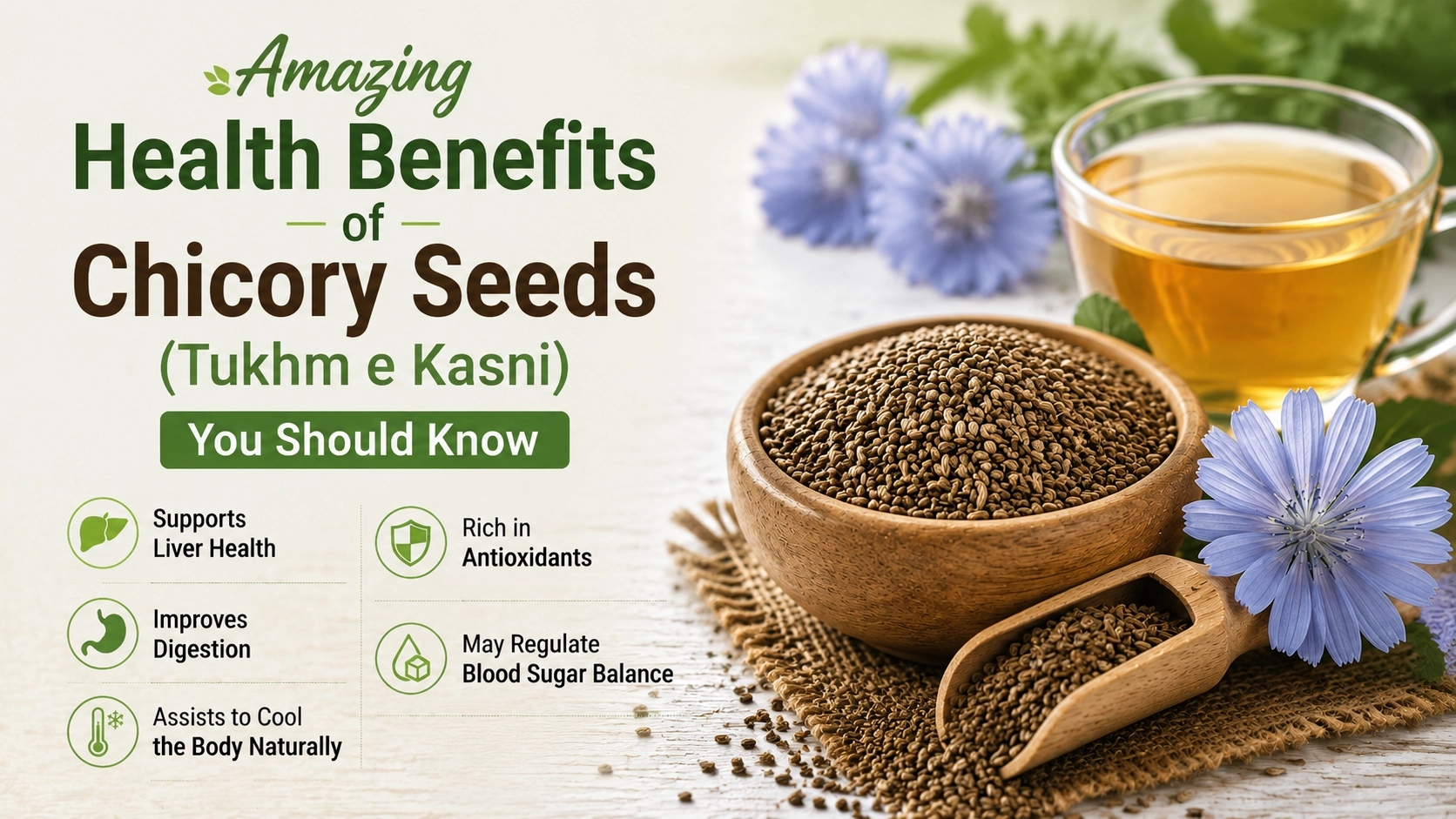
The name of chicory in Urdu and Hindi remains a traditional herbal medicine for centuries. Tukhm-e-Kasni is revered in South Asian households, particularly those of Desi and Unani medicine, for its natural properties of cooling, digestive aid, and aiding liver health.
The scientific name of the chicory plant is *Cichorium intybus*. Several different parts of this plant have been utilized in multiple manners, such as its leaves, root, and seeds. Chicory root is a known substitute for coffee in many countries, and chicory seeds are more frequently employed in herbal teas, soaked-water teas, and traditional beverages.
An herbal—so simple a way to understand Tukhm e Kasni is this: Tukhm-e-Kasni is definitely an herbal treatment, but it ought to be utilized correctly. It’s not a cure-all, and it should not be a substitute for treatment by a health professional.
What are chicory seeds?
Chicory seeds are derived from the chicory plant, a flowering herb that is found throughout the world. The plant is characterized by a slightly bitter flavor and has traditional medicine properties. In herbal medicine, chicory has been applied to body heat, digestion, liver, and appetite.
Tukhm-e-Kasni holds an exclusive position in South Asian herbal treatments. Others have found it useful to drink it in hot weather or if they feel warm from the inside. It is also often used in Chinese medicine as a part of herbal remedies for the comfort of the liver and stomach.
The seeds are tiny and dry and are typically brownish in color. Use them whole, crushed, soaked in water, or boiled to make an herbal tea. Although very popular, traditional use should be remembered, as there is still limited scientific research data regarding chicory seeds. Research on the chicory plant, root, and extracts is available, but significant amounts of research are missing.
The nutritional and herbal benefits of chicory seeds
Chicory seeds are a source of natural plant compounds that can help promote overall wellness. It is a plant that is famous for its antioxidants. Antioxidants can shield the body from oxidative stress, a phenomenon associated with aging, inflammation, and overall health problems.
Another important connection of chicory is a type of prebiotic fiber. The seeds do not necessarily contain a lot of inulin; this compound is primarily found in chicory root. However, the entire chicory plant is frequently associated with gut health due to prebiotic fibers, which nourish beneficial gut bacteria.
Traditionally, chicory is bitter as well. Bitter herbs are commonly prescribed in herbal medicine to encourage appetite and digestion. This is one particular reason why the remedies of the chicory type have maintained their popularity with regards to wellness of the stomach and liver.
The following are the best health benefits of chicory seeds / Tukhm e Kasni:
Supports Liver Health
Liver support is one of the popular traditional applications of Tukhm e Kasni. In the Desi and Unani systems of medicine, it is used in the treatment of liver wellness, body heat, and body cleansing.
The liver-protective activities of chicory have been studied in a few research works. Research has looked at chicory extracts and their possible effects on liver enzymes and oxidative stress. But it doesn’t imply that Tukhm e Kasni can cure a liver disease.
People with fatty liver disease, hepatitis, jaundice, high liver enzymes, or any serious liver disease should see a doctor. Tukhm e Kasni can be considered a complementary herbal remedy but should not be a substitute for the appropriate medical treatment.
Improves Digestion
Tukhm e Kasni is also traditionally used for digestion. It’s commonly used for bloating, constipation, stomach heat, and digestive discomfort.
The relationship of chicory to digestion comes from the natural bitter compounds found in chicory and the relationship to inulin. Inulin is a prebiotic fiber that feeds the healthy bacteria of the gut. Improved stomach health and comfort, digestion, and poop might all be assisted by a healthier gut environment.
But some might experience some gas or bloating after consuming chicory-based products, particularly when taken in excess. This is why it’s better to test with a small amount and see how your body reacts.
Assists to cool the body down naturally
Traditionally, Tukhm e Kasni is famous in South Asian herbal medicine for its properties. It is used in summer or when people experience an excess of body heat.
People have consumed Tukhm e Kasni water or qehwa to feel fresh and balanced in the hot weather. It is also a component of several herbal remedies for heat-related discomfort.
This cooling effect is mainly based on traditional knowledge. Though the scientific literature may not refer to it in the same terms, Desi herbal culture has an intimate relationship with “thandi taseer.”
However, if they have dehydration, high fever, heat exhaustion, or extreme fatigue, they should not solely rely on herbs. Good hydration, rest, and medical recommendations are important.
Rich in Antioxidants
Chicory has antioxidant properties in its natural state, which can help to protect the body from free radicals. The free radicals may damage cells and lead to oxidative stress.
Healthy foods and herbs that are rich in antioxidants are commonly associated with numerous health benefits, including overall wellness, immune strength, and healthy aging. Tukhm e Kasni may be beneficial to the body in this way as part of a balanced diet.
Remember, however, that no single herb gives all health benefits. A proper diet, fresh fruits and vegetables, adequate water intake, and a nutritious night’s sleep are also vital.
May Regulate Blood Sugar Balance
The possibility of chicory plants’ and inulin’s effect on blood sugar and metabolic health has been studied. Inulin is a prebiotic fiber that can help maintain gut health, which could have a beneficial impact on blood sugar and digestion.
But diabetics must take extra precautions. Tukhm e Kasni should not be used as a substitute for diabetes medicine. People who are on blood sugar-lowering medication or insulin or metformin should speak to their doctor prior to regularly consuming chicory seeds.
If you are taking medication, herbs may interact with it, and they can also impact blood sugar levels, so it is important to get professional advice.
May Ease Appetite and Stomach Distress
Chicory is bitter, and it has a long history of use to aid in appetite and digestion. Bitter herbs are often used before or after meals in herbal systems to help the digestive process.
For individuals who experience stomach discomfort after eating or feel heavy, Tukhm-e-Kasni can be beneficial. But when it persists for a longer period of time, then there’s a need for medical advice when it comes to stomach pain, acidity, vomiting, and digestion problems.
Chicory seed uses are listed and explained below. The uses of chicory seeds and their explanation are listed below.
There are a number of traditional methods for utilizing Tukhm e Kasni. The most popular ones are qehwa, soaked seeds, powder, and herbal mix.
Tukhm-e-Kasni Qehwa
For a simple herbal drink, prepare a small amount of Tukhm e Kasni and boil in water for several minutes. Strain the water and drink it hot after boiling.
Usually used for body heat, digestion, and general wellness.
Water-Soaked Seeds
Another popular practice is to soak the seeds for an overnight period of time. The water is strained and drunk in the morning.
It is a common practice, particularly in warm weather, in traditional practices. But the amount should be limited and particularly not for novices.
Powder Form
Tukhm e Kasni powder can be purchased from herbal stores as well. Powder form is more convenient for mixing with water or any herbal mixture.
When using powder kind of, however, take care, as it is simpler to take an excess. Buy from a reputable supplier and don’t use a lot without guidance.
Herbal Mixtures
In Unani and Desi remedies, Tukhm e Kasni is sometimes mixed with other herbs. These can be used as a liver, stomach, or cooling mixture.
Do not “make up” strong herbal combinations. Each herb will have a different effect, and some may not be appropriate for everyone.
Recommended Dosage
Dosages of Tukhm-e-Kasni are not fixed and will vary from person to person. The correct dose varies according to age, health, body type, medicines, and purpose.
When using in general, it is advisable to use a very small amount at first. Do not overuse or take large amounts of them without the advice of a qualified herbalist/hakeem/doctor.
Herbal remedies are perceived to be always safe, as they are natural. This is not true. Many natural herbs also have side effects, particularly when used in high doses or in combination with drugs.
Chicory seeds have a number of side effects.
Traditionally Tukhm e Kasni is used; however, some people might have side effects. Common side effects are:
Gassiness, bloating, abdominal pain, rumbling, diarrhea, or slight cramps. In individuals with a sensitive digestive tract, these effects might occur more frequently.
Some people may also have an allergic reaction to chicory. Chicory is a member of the Asteraceae family, which includes ragweed, daisies, and marigold. Care must be taken to avoid chicory for people allergic to this plant family or only use it with medical advice.
Before using Tukhm e Kasni, please adhere to these precautions:
The use of Tukhm e Kasni in a high or medicinal dose should be avoided by pregnant women. High doses of chicory during pregnancy may not be safe.
Breastfeeding mothers should also take caution and consult a doctor before using it regularly. The available information is insufficient to be used in determining its safety during breastfeeding.
Patients with liver disease, kidney disease, diabetes, or chronic diseases should take medical advice before using Tukhm e Kasni. If they are on drugs, it is particularly important.
Stop immediately and consult a doctor if any of these symptoms occur: itching, swelling, difficulty breathing, skin rash, severe stomach pain, or dizziness.
Tukhm e Kasni is not suitable for certain individuals.
Tukhm e Kasni may not be suitable for all. Do not use, or ask a doctor before using, by any of the following:
High amounts are not recommended during pregnancy, as there is the possibility of chicory not being safe in medicinal doses if taken during pregnancy.
Caution should be advised for use by breastfeeding mothers, as safety information is limited.
Chicory should be avoided by people sensitive to ragweed, daisy, marigold, and other plants.
Diabetic patients taking medicine must get advice from an expert, as chicory can impact the blood sugar balance.
Persons suffering from liver and kidney disease should not take herbal medicines without medical consultation.
Herbs can also interact with medication; those who are on regular medication should be careful.
Tukhm e Kasni is made from chicory root. Chicory root is used to make Tukhm e Kasni.
It’s often mistaken for chicory root, but it’s not.
means chicory seeds. These are mostly used in South Asian herbal remedies, especially for cooling, digestion, and liver support.
is the root of the chicory plant. It is often roasted, ground, and used as a coffee substitute. Another name for chicory root is that it is a good source of prebiotic fiber called inulin.
In some instances, seeds have a few traditional applications that can be compared with roots, but the two are not the same. Chicory root is more widely used in the food and supplement industry, whereas Tukhm e Kasni is more commonly used in herbal and traditional medicine.
Final Thoughts
Tukhm e Kasni, or chicory seeds, are a traditional herb and have been used for centuries in South Asian and Unani medicine. They’re best recognized for liver support, digestion, natural cooling, and being an antioxidant.
medication, but the use of the same is of great importance. Tukhm e Kasni is not a miracle medicine and should not be used in place of medicine. Use with caution if you have any medical condition or are taking regular medication; ask a doctor first.
Intake, intake. Always use in small amounts, select good seed from a reputable supplier, and never use for prolonged periods without professional advice. Good health is still the result of a healthy lifestyle, a balanced diet, adequate fluid intake, and sound medical guidance.
FAQs About Chicory Seeds / Tukhm e Kasni
Is Tukhm-e-Kasni good for the liver?
Tukhm e Kasni is traditionally used for liver support. Some research on the chicory plant has explored liver-related benefits, but it should not be considered a replacement for medical treatment. If you have liver disease or high liver enzymes, consult your doctor.
Can I use chicory seeds daily?
Small amounts may be used by some people, but daily or long-term use should be discussed with a doctor or qualified herbal expert. Taking too much may cause gas, bloating, or stomach discomfort.
What is Tukhm e Kasni called in English?
Tukhm-e-Kasni is called chicory seeds in English. The scientific name of the chicory plant is Cichorium intybus.
Are chicory seeds good for digestion?
Yes, Tukhm e Kasni is traditionally used to support digestion. Chicory is also linked with gut health because of compounds like inulin, especially in chicory root. However, some people may experience bloating or gas.
Is Tukhm-e-Kasni safe in pregnancy?
Pregnant women should avoid using Tukhm-e-Kasni in high or medicinal amounts. Chicory may not be safe in large amounts during pregnancy, so it is better to consult a doctor before use.