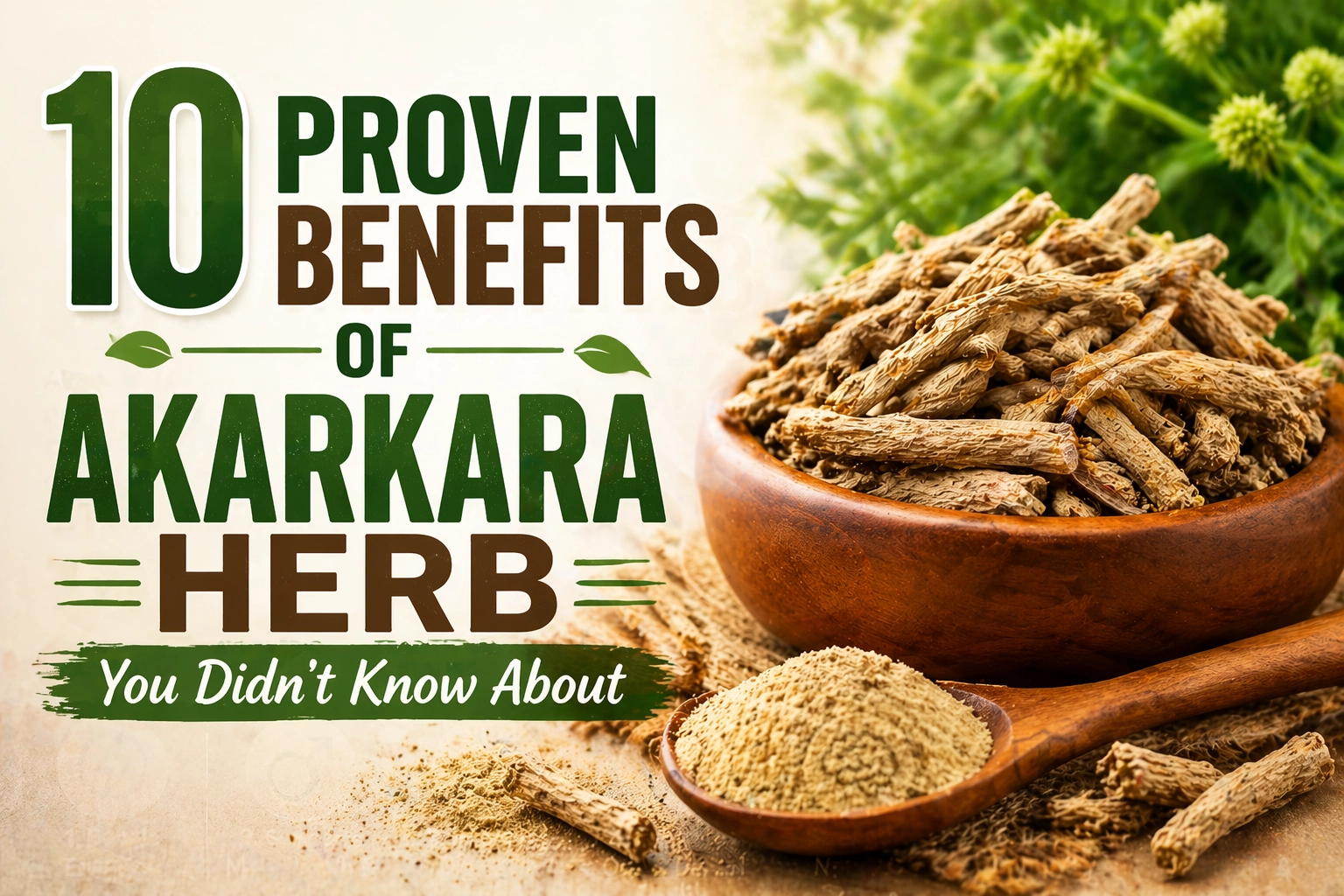
Akarkara is the name of a substance you might have learned about recently, in case you have been venturing into the field of herbal medicine or Ayurvedic herbs. It is a kind of old-fashioned herb that does a lot without making a noise, but the majority of people not belonging to the traditional wellness community have not heard about it. The benefits of Akarkara are well-known in the Unani and Ayurvedic medicine, and its popularity is rapidly increasing, particularly among individuals seeking natural methods of promoting energy, digestion, and general well-being. Pakistan is witnessing a resurgence of the use of herbs such as akarkara as part of a broader trend towards natural remedies and herbal supplements. Have you spotted it in your local pansari shop, or have you accidentally come across it on the internet? Then this guide is here to guide you in knowing what it is, what it can do, and how to use it safely. The end of this article will give you a clear understanding of how to use the akarkara herb, its traditional history, possible side effects, and tips on how to incorporate it in your lifestyle.
What Is Akarkara Herb?
Anacyclus pyrethrum, or Akarkara, is a flowering plant whose root is commonly used in traditional herbal medicine. The plant is found in North Africa, the Mediterranean, and some parts of the Indian subcontinent. The most common part of the root used in South Asian traditions is the dried part that is ground to a powder.
It is commonly referred to in Urdu and local herbal markets as Akarkara or sometimes spelled as عاقر قرحہ (Aqar Qarha). It is a member of the daisy family (Asteraceae) and has a sharp, slightly bitter flavor with a tingling feeling on the tongue – something that makes it easy to recognize even when in powder form.
Akarkara root has been an ingredient of Ayurvedic and Unani systems of medicine for centuries. It was traditionally a nerve tonic, digestive stimulant, and energy-giving herb. It can now be found in the form of akarkara powder, dried root pieces, herbal capsules, and as a component of several wellness blends.
Akarkara Root Profile (Traditional).
The most interesting aspect of akarkara is that it is a multi-purpose herb that is traditionally used. Historically, practitioners of Unani medicine have used it to treat the health of the nervous system, enhance blood flow to some parts of the body, and treat slow digestion.
The root has natural plant substances such as alkylamides (including pellitorine), which are thought to be the cause of that tingling feeling and many of its traditional effects. It also contains naturally occurring antioxidant compounds, so it is applicable for more than one purpose.
Akarkara was also used in combination with other herbs such as ashwagandha, safed musli, or shilajit in the wellness formulas of men in classical texts. The blend remains a popular practice in herbal supplements in Pakistan and India.
Top 10 Akarkara Advantages to be aware of.
1. May Support Natural Strength and Vigor.
The most popular of the benefits of the akarkara is that it may help maintain physical energy and decrease fatigue. The root has always been a traditional rejuvenating tonic to individuals who are generally fatigued or in need of a boost of vitality. It does not act in the same way as caffeine does; it is rather a gradual, constant sort of reinforcement of the natural energy systems within the body. Individuals who incorporate the use of akarkara powder as part of their daily routine usually testify that with continuous use, they feel more active. It is especially a favorite of men seeking natural energy-enhancing herbs without the use of stimulants.
2.Akarkara Men Benefits – Supports Men’s Wellness.
Akarkara is an old Ayurvedic and Unani medicine used in the well-being formulas of men. People believe that it is traditionally helpful to maintain a healthy testosterone balance, and it can be used to treat problems with low vitality or decreased drive. The herb is commonly found as a natural supplement to male reproductive health and vitality. The benefits of Anacyclus pyrethrum to men are some of the most popular searches in relation to this herb, with good reason; its use in this region dates back centuries. It is not a substitute for medical care, but a well-considered supplement to a healthy lifestyle.
3. May Help Support Digestion.
Traditionally, Akarkara root is utilized as a digestive stimulant. It is thought to stimulate the release of digestive enzymes, which could help to digest food more effectively and ease post-meal bloat or post-meal heaviness. In Unani practice, it was widely used to treat slow digestion, appetite loss, and mild stomach pains. Akarkara powder is also used as a traditional digestive tonic by people who have weak digestion and who may add a small portion of the powder with warm water before or after eating. It is a tender herb in this respect, not a bitter laxative or stimulant.
4. Historically, as a Nerve Tonic.
Akarkara was a herb of the nervous system in classical Ayurvedic and Unani books. It was considered to promote nerve activity and a slow, gradual mental alertness. It was also used to treat nerve weakness conditions (such as facial paralysis or numbness) by some traditional practitioners, but as part of a larger herbal treatment. Nowadays, it is more widely used as a nerve-supporting herb that can help to enhance focus and mental clarity in the long run. It is regarded as a weak adaptogen-like herb.
5. May Support Oral and Dental Health.
It is among the lesser-known uses of aakara herbs that often leaves people in shock. The root has a long history in traditional dentistry – dried akarkara root was chewed or rubbed into the gums to promote oral health and alleviate toothache pain. The alkylamide compounds make the root feel tingling and numb as you chew it, and are mild analgesics. Akarkara is still used as an ingredient in some natural toothpastes and herbal tooth powders. It is not a dental procedure, but being a component of a traditional oral care regimen, it has true historical roots.
6. May Help Support Joint Comfort.
Akarkara root has been a part of herbal preparations that are designed to help maintain joint and muscle comfort. In the Unani medicine, it was applied in massage oils and internal tonics for those who have general joint stiffness or mild muscular pain. The fact that it warms in traditional classification implies that it was thought to increase local circulation when frequently applied or used. In Pakistan, people who subscribe to traditional herbal regimens occasionally use akarkara with warming oils such as sesame or mustard oil to massage themselves. It is a soft-supporting herb here, not a pain reliever.
7. Akarkara to Support Immunity.
Plant compounds are present in Akarkara, which are thought to act as immune-modulators in traditional herbal medicine. The constant consumption of the herb as a tonic was traditionally believed to build up the body’s defenses in the long term. The antioxidant effectors in the root could help to ensure the protection of cells against daily oxidative stress. It belongs to a bigger group of immunity-enhancing herbs in Ayurvedic and Unani systems. Although it is not a vaccine or cure to any disease, it can be a part of an overall herbal regimen to help maintain health and well-being.
8. May Support Healthy Circulation.
The traditional medicine regards Akarkara as a warming herb, and the traditionally related warming herbs are traditionally linked with the promotion of healthy blood circulation and blood flow. Improved energy, warmer extremities, and overall vitality are often associated with better circulation. Unani medicine practitioners have traditionally applied it to those with cold hands and feet or overall lethargy. The compounds that stimulate the root, particularly pellitorine, are believed to contribute to this. This causes it to be a regular part of herbal blends aimed at men and overall health.
9. Conventionally Used to Help with Respiratory Comfort.
A secondary traditional use of Akarkara is as a support of respiratory health. It was occasionally employed in herbal preparations to treat cough, throat irritation, and slight respiratory congestion. The warming and stimulating effect of the herb was thought to aid in the clearing of mucus and easy breathing. In traditional Unani medicine, it was occasionally used together with honey or ginger to make preparations to soothe the throat. This application is not as well-known as some of its other uses, but it nonetheless represents a significant aspect of its conventional profile in herbal medicine systems in South Asia.
10. May Support Hormonal Balance and Vitality in Women.
Although the term is more often used in reference to the health of men, in traditional terms, akarkara is also applicable in the context of female health. It was also employed in some Unani preparations to aid hormonal balance and to treat fatigue of nutritional or hormonal deficiency. Tonics containing akarkara root were sometimes used to treat women who had low energy, general weakness, or irregular cycles. It is never administered alone in a blend but in combination with other ingredients in the formulas of women. Like any herb, women should seek medical advice before use, particularly in times of hormonal fluctuations.
Uses of Akarkara.
Akarkara is applied in several ways by people. The most prevalent type is akarkara powder, which may be combined with warm water, honey, or milk. It is also available in capsule form in herbs for those who may not have time to make it themselves. Small amounts of the dried root were stored in traditional households to treat toothache – it was a household remedy to rub the root on sore gums. It is commonly combined with other Ayurvedic herbs such as ashwagandha or gokshura in men’s health supplements.
Akarkara root oils are also used by some herbal practitioners in the form of massage, especially to support the joints and muscles. It is also used as an ingredient in traditional herbal tooth powders (manjan) and certain herbal hair oils.
Akarkara Side Effects
Akarkara is not usually harmful, provided that it is taken in moderate doses as a component of a traditional herbal regimen. As with any active herb, however, excess or abuse will result in a degree of uneasiness.
The most common side effects of overdose are mild nausea, stomach irritation, or burning in the mouth or throat. The tingling effect is inherent; however, in very large doses, it may be uncomfortable.
Individuals who have sensitive stomachs should begin with smaller quantities and observe the reaction of their bodies. There are uncommon but possible allergic reactions, particularly in individuals who are sensitive to plants of the daisy (Asteraceae) family.
This article is not medical advice. In case of any unusual symptoms following the use of akarkara, cease use and seek medical advice.
The use of Akarkara Powder.
In warm water or warm milk: Add a pinch of akarkara powder (approximately 1/4 teaspoon) into a glass of warm water or warm milk. It is one of the oldest methods of taking it as a tonic. Taking it at night before bed is a favorite wellness activity among many people.
With honey: It is a usual Unani preparation to mix the powder with raw honey. This may be used to cover the bitter taste, and it is more palatable to swallow.
As a powder in herbal blends: Akarkara powder is a good pairing with other herbs such as ashwagandha powder, safed musli, or shilajit in homemade herbal blends. This is a typical method used in the traditional wellness programs among men. As capsules: You do not feel like preparing or eating it, so you can use akarkara capsules. They are consistent in quantities and are convenient to fit into a daily schedule.
Begin with a small amount in case you are new to this herb. Consistency is better than infrequent but high amounts.
Who Should Not Take Akarkara / Precautions.
Although the safety of akarkara has a long history of use at moderate levels, some populations should take caution: Akarkara should not be taken by pregnant women unless directed by a qualified Unani or Ayurvedic practitioner, since stimulating herbs are not usually advised during pregnancy. It is also advisable that breastfeeding mothers be on the safe side and consult a healthcare provider before using. Akarkara should not be used by children without a professional recommendation, since the right doses for young age groups are not properly determined
Individuals who are taking blood pressure drugs, hormone drugs, or medications related to nerves should consult their physician before incorporating this herb into their daily routine, because although herbal-drug interactions are rare with these medications, they can still occur. Akarkara is also to be approached with care in case you are allergic to chamomile, marigold, or any other daisy family plants.
Buying and Storage Hints.
When purchasing akarkara powder or dried root, make sure that you are purchasing a product that is distinctly labeled with the botanical name (Anacyclus pyrethrum); otherwise, you will be purchasing a fake item. The pure akarkara powder must be sharp and slightly spicy in smell and have a distinct tingling feeling when a small portion is rubbed on the tip of your tongue. Do not use powders that appear very pale, have a musty odor or contain fillers. Akarkara powder of good quality is of uniform color, or off-whitish- grayish- tan, and of fine dry texture. To store, place in an airtight glass jar without moisture, heat, or direct sunlight. A dry cool pantry/cupboard is good. Akarkara powder has a shelf life of 12-18 months when properly stored. PansariOnline.pk offers you akarkara powder and other herbal products that are sourced in terms of quality and freshness, and are convenient to those who desire the benefits of trusted herbal products delivered to their doorstep in Pakistan.
Conclusion
Akarkara is one of them that are really useful herbs that should be paid more attention to than it is. You want to support your energy, promote the well-being of men, digestion, or simply discover the world of Ayurvedic and Unani herbs, a good place to start with is akarkara benefits.
The trick is to apply it properly, in moderation, as a component of a healthy routine, and in consideration of your own health requirements. It is not a magic bullet, but can be an interesting complement to a considered herbal wellness practice. In case you are willing to give it a go, begin small, be consistent, and allow your body time to react. And, as usual, should you have any particular health issues, it is always a good idea to discuss them with a competent healthcare professional.
10 of the most commonly asked questions about Akarkara.
1. What is the herb of akarkara?
Akarkara (Anacyclus pyrethrum) is a flowering plant whose dried root is used in Ayurvedic and Unani herbal medicine. It is reputed to be a stimulant of energy, digestion, male wellness, and nerve health. In Pakistan, it is sold at herbal stores as akarkara powder or dried pieces of roots.
2. What are the principal advantages of akarkara?
The most important benefits of akarkara are that it helps to maintain natural energy and stamina, male wellness, healthy digestion, nerve activity, oral health, and joint comfort, as well as immunity. It is a versatile herb that has a long history of use in traditional herbal medicine systems of South Asia and the Middle East.
3. What is the usage of akarkara powder?
Blend a small pinch (approximately 1/4 teaspoon) of akarkara powder with warm water, milk, or honey and consume it once a day. It can also be mixed with other herbs such as ashwagandha. The convenience of the capsule form can be used by those who do not like the taste.
4. Does akarkara benefit men?
Yes, akarkara is especially popular in its traditional application for the wellness of men. It is often added to herbal preparations to help maintain stamina, vitality, and male reproductive health. It is one of the most famous Unani herbs of this sort.
5. Do you have any side effects of the herb of akarkara?
Excess can lead to mild nausea, stomach irritation, or a sore throat. It is well-tolerated in moderate doses. Individuals who are sensitive to the daisy plant family ought to test. Always begin with a little.
6. Is it possible to use akarkara?
The answer to this is yes, but women can take small doses of akarkara as a general wellness herb, though pregnant or breastfeeding women should not take it unless recommended by a qualified healthcare practitioner.
7. What is the place of purchase of akarkara powder in Pakistan?
Akarkara powder can be found at the old pansari shops and online on websites such as PansariOnline.pk. To ensure quality, consider pure, well-marked products that have a good scent and a tingling effect when purchasing.
8. What is the time period to realize the results of akarkara?
Herbal herbs usually require regular use over weeks to notice effects. The majority of the individuals who use akarkara frequently report slow progress after 3-6 weeks. It is not a quick fix but a consistent one as a part of a wellness program.
9. Does akarkara co-exist with other herbs?
Yes, traditionally, ashwagandha, safed musli, shilajit, and gokshura are typically used together with akarkara. Nevertheless, when taking several herbs, you should talk to a medical practitioner in case you are taking any drugs.
10. What is the taste of akarkara?
Akarkara is sharp and slightly bitter, and has a tingling, numbing sensation, particularly when it is used on the tongue and lips. This feeling is owed to its natural alkylamide compounds and is a good measure of pure, high-quality akarkara root.