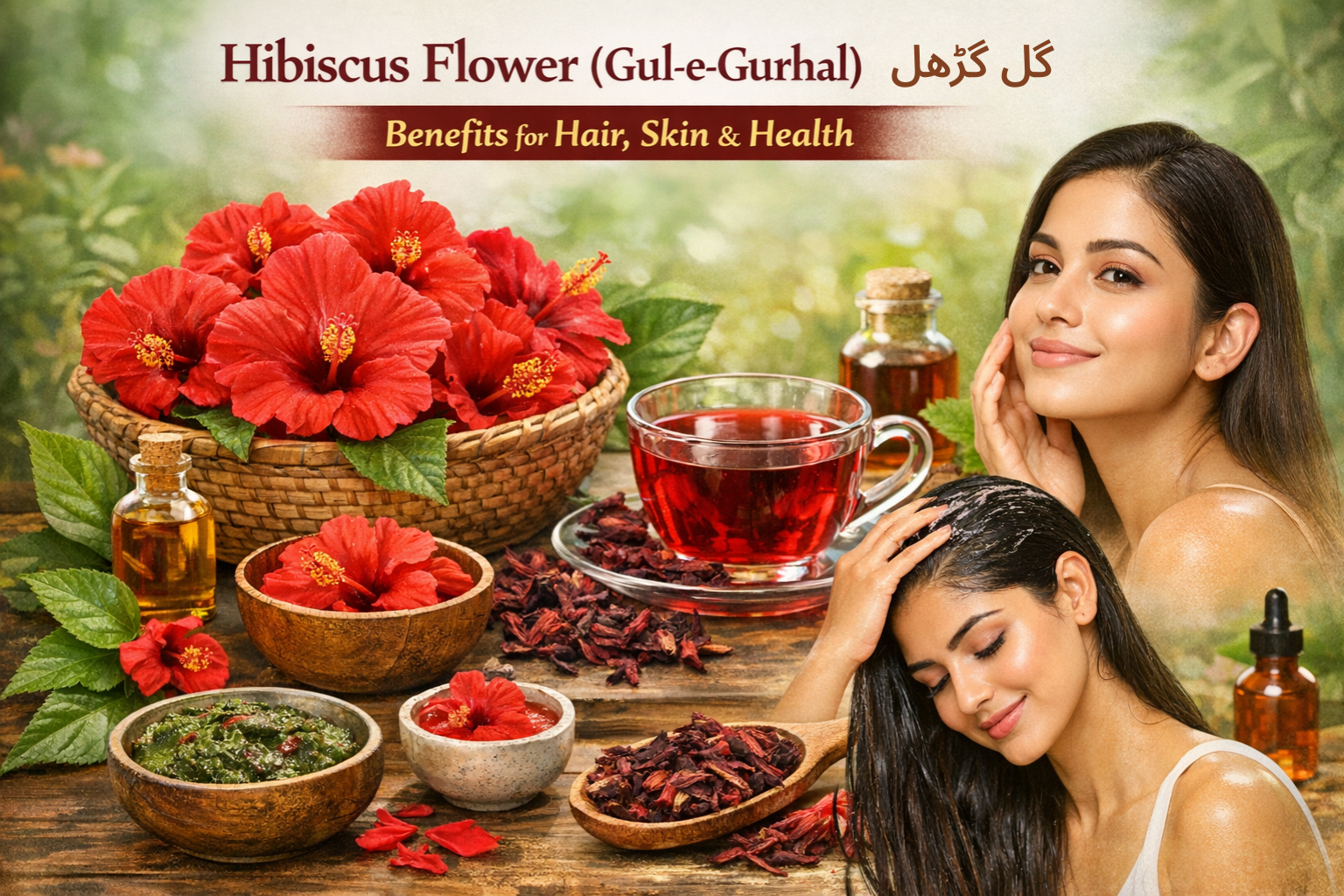
Hibiscus flower (Gul-e-Gurhal) is one of the herbs that people from Pakistan frequently look for when they need natural help with hair health, skin care, and daily well-being. A lot of people also look for the gul gurha, Hibiscus flower benefits, and the benefits of Hibiscus tea due to the fact that this vibrant flower has been used for a long time in its traditional use in home remedies and herbal regimens.
People use hibiscus oil in tea, others in an eye mask, as well as hair masks. In this article, you will discover the definition of hibiscus and how it is utilized, its 10 advantages, adverse effects, warnings, and simple tips to buy it for Pakistani readers.
What is Hibiscus Flower (Gul-e-Gurhal) گل گڑھل?
Hibiscus flowers are a shrub belonging to Mallow’s family. The Mallow family is found throughout Pakistan as well as South Asia. Gul-e-Gurhal typically refers to the hibiscus that is commonly used also known as China rose, which is often associated with the Hibiscus rose-sinensis. In herbal beverages, specifically the dried calyces red from Hibiscus Sabdariffa are used in a variety of ways. This is the reason why some people make use of the same name for a variety of products containing hibiscus.
In the local market, the hibiscus plant can be found as dried flowers or powder, cut into tea, or mixed along with different herbs. It is a popular ingredient in hair care that is natural, using the use of hibiscus, herbal remedies for skin, and caffeine-free health drinks.
Traditional Profile of Hibiscus Flower (Gul-e-Gurhal) گل گڑھل
Hibiscus is a popular choice for its botanical substances like polyphenols, organic acids, anthocyanins, and many other antioxidant-rich elements. In simple terms, they are the organic substances that give hibiscus its dark colour and its appeal as a herb. Research studies on hibiscus also highlight its long-standing tradition of use in beverages, food, and in folk health practices.
To be used for beauty, hibiscus leaves and flowers are typically made into oils, pastes as well as masks, rinses, and other products. For use in the health field, dried hibiscus flowers are typically infused into a tart red tea. There is more evidence in some instances of internal use for blood pressure relief, whereas the majority of skin and hair care applications are more traditional and not clinically validated.
10 Benefits of Hibiscus Flower (Gul-e-Gurhal) گل گڑھل
1. Hibiscus to support hair growth
Hibiscus is among the most well-known herbs used in traditional beauty care, aiding in a healthy scalp as well as hair growth. It is used in the form of the fresh flower, dry powder, or hibiscus oil to nourish the hair’s roots and keep it in better shape. The initial research conducted in labs and on animals has demonstrated the potential for hair growth; the evidence for humans is very limited. It is, therefore, best to think of it as a natural remedy to increase hair growth, not the ultimate solution.
2. Can help prevent hair fall and weak hair strands
Many people make use of hibiscus for hair fall as it could be a part of a strengthening routine. A hair mask made from hibiscus using yogurt, aloe vera, or coconut oil can make your hair feel soft and less dry. It could help reduce the shedding associated with breakage. This is because not every hair loss starts at the root, and sometimes it is due to dryness and weak hair. This is why the hibiscus plant can support more attractive, thicker hair with time.
3. Supports the freshness of the scalp and dandruff management
The leaves of hibiscus for hair, as well as flower pastes, are often applied to the scalp if one wants a cleaner feeling and a more tranquil feeling. Early research and traditional usage indicate that hibiscus’s qualities can aid in the maintenance of scalp hygiene, and that is the reason it is often found in shampoos and herbal oils. This is where a large portion of the claims for the benefits of hibiscus shampoo originate. In the case of dandruff, it can be beneficial as part of an ongoing routine, particularly when the cause is dryness or buildup.
4. Hibiscus to glow skin
Hibiscus for skin is well-known because it is high in antioxidants, and it is commonly used in face masks. A simple facial mask containing hibiscus can help your skin appear more hydrated, fresher, and more youthful following regular use. Some also search for the benefits of hibiscus on skin and whitening; however, the best term to describe it would be to call it glow support and tone brightening, and not bleaching. It can help dull skin appear more youthful and fresher.
5. Helps with acne-prone skin as well as post-acne scars
Hibiscus flowers for use on the face are commonly used in herbal skin care because it helps rid excess oil and aid in an even-toned complexion. A few studies of hibiscus’s compounds suggest the antimicrobial and antioxidant benefits that explain the reason why it is utilized in acne-prone masks. This isn’t a treatment that can be used for acne in a medical setting; however, it could be an element of natural skincare using the use of hibiscus. Certain users may also apply it to dark spots left following breakouts.
6. Helps to maintain youthful-looking skin
When people speak of the anti-aging benefits of hibiscus, typically, they mean helping with the appearance of the skin, visible tiredness, and the appearance of wrinkles. The research on hibiscus extracts has suggested collagen-protective and antioxidant effects that could be beneficial in skincare products. In the real world, this implies that hibiscus could aid in a more elastic, fresh, and young skin if used frequently in a regular skincare routine. It is best used as a soft support not a fast anti-aging solution.
7. A rich source of antioxidants that can improve overall well-being
One of the biggest and most often cited facts about the benefits of hibiscus flower is its antioxidant profile. Antioxidants protect your body from the effects of oxidative stress. This is a major reason why vibrant plant foods and herbs are a staple in routines of wellness. Hibiscus has a lot of its color from anthocyanins as well as other polyphenols. This is the reason it is mentioned in numerous discussions on the antioxidant benefits of hibiscus and natural remedies with hibiscus.
8. Hibiscus tea can help maintain healthy blood pressure
As a health benefit, hibiscus for blood pressure is one of the strongest pieces of evidence from humans. Research and reviews suggest that the tea might aid in lowering blood pressure for some adults, specifically those who have high blood pressure, but the impact is typically minimal. However, the NIH mentions that hibiscus can help; however, the evidence is not conclusive, and it shouldn’t be a substitute for prescription medication. This means that the benefits of tea brewed with hibiscus are important for health, but with a dose of care.
9. May help with digestion and feeling of lightness
A lot of people drink hibiscus tea in the evenings after eating because it is refreshing, light, and simple to drink. The traditional use of hibiscus is linked to digestive ease, and its tart flavor frequently makes it feel calming and calming in routines. It’s not meant to mean that it cures digestive disorders; however, it could help the healthy digestion process in certain situations. The unsweetened hibiscus tea is an easy way to live living a more relaxed lifestyle.
10. Fits into regimens that are weight-conscious and immune-friendly
Many also seek a hibiscus supplement to lose weight, and it is also used to boost immunity. The most accurate belief is that hibiscus may help in these ways by serving as a non-sweetened herbal drink in place of sugary drinks and as a part of an antioxidant-rich diet. It’s not a panacea for weight or for immune-boosting treatment. However, as a non-caffeinated and plant-based beverage, it is a great addition to a healthy daily routine.
Common Uses of Hibiscus Flower (Gul-e-Gurhal) گل گڑھل
Hibiscus is extremely adaptable. This is the reason it is a favorite in natural homes.
To treat hair, people utilize the oil of hibiscus for hair and hair massage oils, the hibiscus powder, or a hair mask made from hibiscus composed of flowers, leaves, aloe vera, yogurt, yogurt methi, and coconut oil. It can also be utilized in DIY shampoos and rinses made from herbal ingredients for shine, softness, and hair care.
To treat skin problems, hibiscus is combined with yogurt, rosewater, honey, aloe vera gel, or multani mitti to create a face mask made of hibiscus. This is a common practice for natural skincare using the use of hibiscus to improve radiant skin, balance oily skin, and tired-looking skin.
For health benefits, the most popular choice is the hibiscus tea. Calyces or dried petals are brewed with hot water to create the drink, which is a reddish-purple color with a tart flavor. A few people also include calyces in their herbal mixes to provide general wellness and support.
Side Effects of Hibiscus Flower
Hibiscus is typically used in the form of a food or drink that is herbal, but this doesn’t necessarily mean it’s suitable for every person. For some excessive consumption of hibiscus tea can cause nausea, lightheadedness, or even a decrease in blood pressure. The use of the paste can irritate a sensitive scalp or skin, particularly in the case of a paste that is not strong enough or left for long enough.
Another aspect to consider is interactions. Hibiscus could interact with a variety of medications, such as blood pressure medications, diuretics, diabetic medications, and the anti-malaria drug chloroquine. This is the reason why herbal remedies are still recommended to be used with caution.
How to Use Hibiscus Flower (Gul-e-Gurhal) گل گڑھل
Beginners can begin using very basic techniques.
To drink tea, in hot, boiled water, boil dried hibiscus until it turns deep red. You can drink it plain or with honey, if you want. A lot of people like it hot, while others prefer to chill it during the summer.
Hair: Mix hibiscus powder or crushed leaves with aloe vera, yogurt, and a mild oil to create a hair mask made of hibiscus. Apply the mask to your hair length and scalp and leave for a few minutes, then rinse. It is also possible to incorporate hibiscus into your normal oiling routine.
For scalp treatment, A mild hibiscus rinse or herbal shampoo could be applied once or twice every week. It is at this point that people often observe the benefits of hibiscus shampoo, like soft hair, as well as a cleaner scalp feeling.
To treat skin problems: Mix a small amount of hibiscus powder with yogurt, rose water, or honey to create a mild facial mask made of hibiscus. Always do a patch test before applying in the event of hypersensitive skin.
Who Should Avoid It / Precautions
Women who are pregnant should be cautious when using hibiscus extracts in therapeutic amounts since safety information is not available, and some sources suggest against the herb during pregnancy. Women who are breastfeeding should be on guard because the evidence isn’t enough to justify regular usage.
Patients who are taking medication to treat blood pressure or blood sugar levels, fluid balance, or malaria should consult an expert in healthcare before taking hibiscus regularly. Anyone with a documented allergy to plants or extremely sensitive skin should conduct a patch test prior to applying hibiscus onto the scalp or face. If you suffer from an existing medical issue and you are suffering from a medical condition, don’t use the hibiscus plant as a substitute to treat.
Buying and Storage Tips
When purchasing hibiscus, you should look for a natural dark red hue, a clean herbaceous scent, and a smooth surface that doesn’t have dust, moisture, or insects. If you purchase powder, make sure it appears clean and fresh without being boring, clumpy, or artificially scent-free. The packaging should be of high quality, as the quality of hibiscus will decrease when exposed to humidity and air.
To help Pakistani buyers, you should choose an authentic herbal shop that clearly states the nature, cleanliness, freshness, and purity of the item. For customers who shop online at PansariOnline.pk, it is important to know whether the hibiscus you purchase is sold as a complete flower powder, tea, or cut to allow you to make a comparison to the one you want.
Place it in a sealed container in a safe place far from direct sunlight, humidity, and heat. A dry, cool cabinet will usually suffice.
Conclusion:
Hibiscus Flower (Gul-e-Gurhal)گل گڑھلis a stunning herb with multiple uses that can be easily incorporated into hair care, skincare, and wellness routines. Its greatest strengths are its classic beauty uses as well as its antioxidant-rich profile. The increasing popularity of hibiscus tea for daily health care.
The best method to use hibiscus is to set realistic expectations. It could help with beautiful hair, glowing skin, and a healthy lifestyle; however, it must be taken with caution, especially when you are breastfeeding, pregnant, or taking medication. In the majority of cases, the best use of hibiscus is as a mild herbal aid but not as a miracle solution.
FAQs About Hibiscus Flower (Gul-e-Gurhal) گل گڑھل
1. What exactly is Hibiscus Flower (Gul-e-Gurhal) گل گڑھل to do?
It is widely used in herbal teas for hair oiling, scalp masks, and face packs. In Pakistan, the majority of people utilize it to treat their hair for skin glow, hair care, and general wellness.
2. Are hibiscus flowers good for hair growth?
Hibiscus to grow hair is a popular treatment in the traditional sense. Initial research is promising. However, it should be thought of as a support component of a regular hair routine, but not a guarantee of treatment.
3. Do I have to use hibiscus leaves to grow hair?
It is true that the leaves from hibiscus that are used to treat hair are usually ground into a paste or blended into oil. They are often employed for hair care for softness, softness, and to reduce dryness.
4. What are the advantages of shampoo hibiscus?
The use of hibiscus in herbal shampoos for a fresher scalp feeling, smoother hair with less drying. The results are different; however, it is a popular ingredient for natural hair care using the hibiscus.
5. Are hibiscus flowers good for glowing skin?
Absolutely, hibiscus for glowing skin is a popular cosmetic use. It could help make the skin appear fresher and more radiant, especially when used as a mild facial mask.
6. Does hibiscus aid in reducing dark spots or acne?
It can help with acne-prone skin by way of a routine that is mild for the skin. There are also people who use the hibiscus plant for dark spots; however, the results aren’t as quick and are not as effective as medical treatments.
7. Do I have to take hibiscus tea throughout the day?
Many do, however moderate use is advisable. If you suffer from lower blood pressure, use medication, or feel unwell following the use of it, talk to a doctor first.
8. Can hibiscus be used safely for people with high blood pressure?
Hibiscus could help with blood pressure in certain cases; however, it could also interact with blood pressure medication. Patients with hypertension should utilize it cautiously and not substitute it for prescription medication.
9. Do breastfeeding or pregnant women make use of the hibiscus plant?
It is better to be on the safe side. Pregnancy or nursing isn’t well established; professional guidance is the best option.
10. How do you keep dried hibiscus flowers or powder?
Place them in an airtight container in a dry, cool space far from moisture and sunlight. This will help preserve the freshness, color, and aroma.