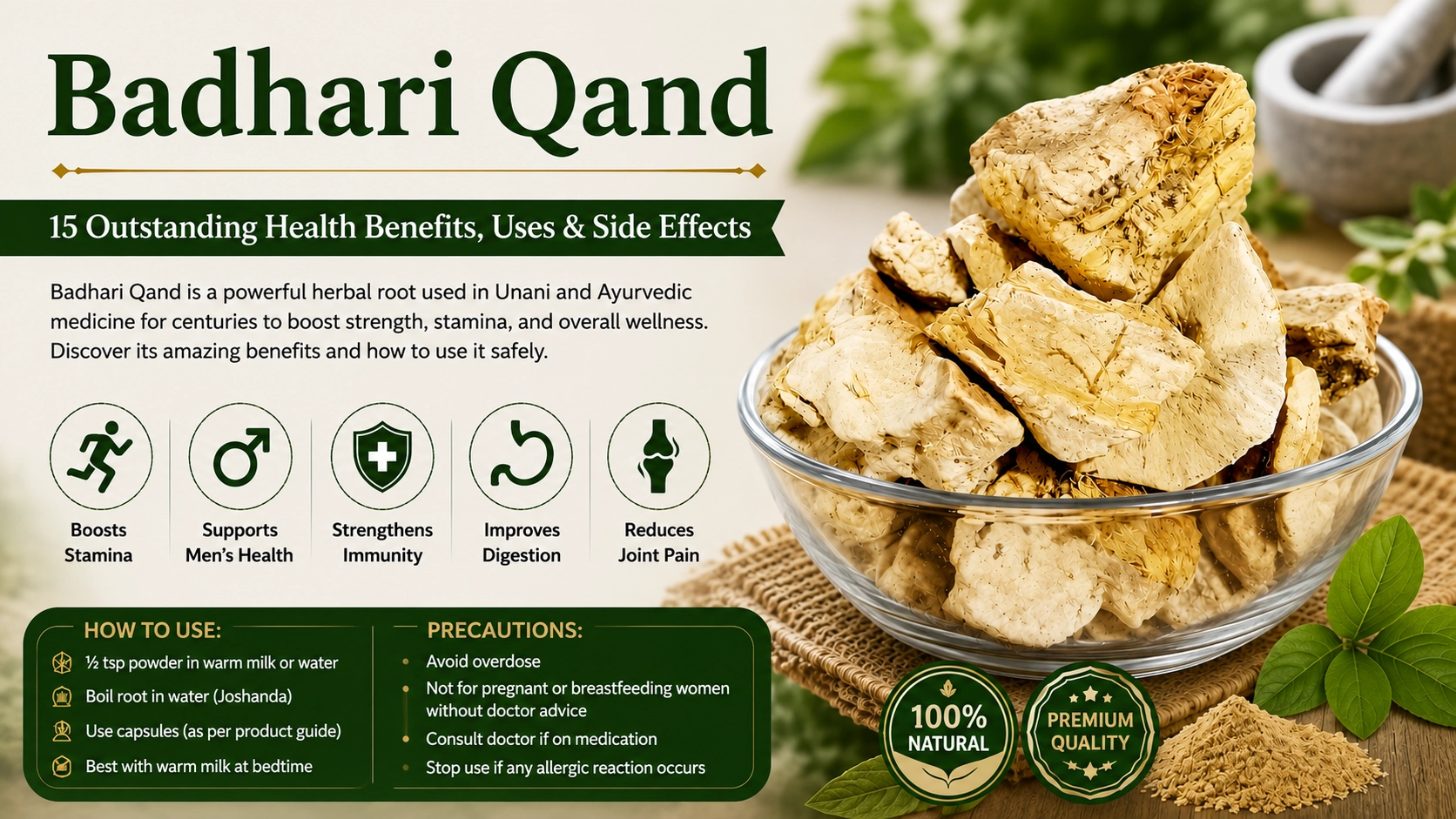
If you step into any classical pansari (herbal) shop, do not be surprised to find a prominent shop known as Badhari Qand. This herb has been employed in Unani and Ayurvedic medicine for centuries to combat overall inadequacy, bolster potency, and support men’s health. So, this article summarizes everything that you should know about Badhari Qand—its definition, uses, how to use it, and precautions.
What is Badhari Qand?
Badhari Qand is an underground root or edible tuber, shaped according to the root conditions, which are constantly in variety. It has a light, neutral flavor but is traditionally classified as warm and dry. It is referred to as Vidarikand in medical literature and botanically belongs to the family Pueraria (English common names: Kudzu Root or Indian Kudzu).
It is easily available in dried root, powder, and capsule form from panari markets throughout Pakistan. It is very common for use in strength tonics, herbal decoctions (joshanda), and also in traditional home remedies.
15 Outstanding Health Benefits of Badhari Qand
Fight General Weakness
Badhari Qand has been used traditionally as a tonic for persons who are lacking in general body strength and low energy. It is suspected that regular, moderate use restores strength after illness or exhaustion or other forms of physical strain (for example, childbirth) and allows the body to perform more as it did before these events during daily activities—like walking around.
Increases Strength and Stamina.
One of the reasons Badhari Qand is most widely known for in traditional uses is as an all-natural stamina boost. Its use is especially common in formulas designed to boost strength, since it is thought to assist the body in sustaining effort for longer periods of time, and it is therefore more popular among those who tire quickly during work or exercise.
Supports Men’s Health
Badhari Qand has a versatile track record in Unani and desi tibb, as they are known to support male virility and libido. It is often used in traditional “taqat” (strength) recipes to help enhance general male sexual health and fortitude.
Strengthens the Reproductive System
In addition to overall vitality, this herb is traditionally taken as a tonic that nourishes and strengthens the reproductive system in both men and women. Therefore, it can be found in many herbal blends promoting fertility & general wellness.
Provides a Cooling Effect
Unlike many “hot” tonic herbs, Badhari Qand is said to be a cooling and soothing Ayurvedic herb for the body. This is why it is much adored in the summer or when someone suffers from excessive body heat, burning sensation, and any heat-related discomfort.
Supports Healthy Digestion
Traditionally, Badhari Qand is used to support normal digestion. Regularly taking a small amount of this to help alleviate sluggish digestion and constipation is reputed to enable the gut to operate more smoothly.
Soothes Stomach Irritation
Besides supporting digestive health, this herb is used to ease general stomach problems like indigestion and acidity, so it can be a gentle natural remedy for people with fastidious stomachs.
Reduces Joint and Bone Pain
Badhari Qand is used in traditional Unani and Ayurveda-formulated remedies for mild joint stiffness or bone pain. It is believed to provide a warming analgesic effect on the joints, which may explain its frequent use in herbal formulas marketed for maintaining bone and joint health, particularly in older adults.
Clears Excess Mucus
For centuries, this root has been used in folk medicine to help clear excess mucus and phlegm from the airways, allowing for easier breathing during colds or seasonal congestion.
Cough Relief
Similarly, due to its soothing effect on the airways, Badhari Qand is also traditionally used in managing cough, especially where the cough occurs as a result of excess mucus or irritation of the throat.
Lowers Swelling
Badhari Qand has been used in traditional medicine to help lower minor swelling of the tissues in various parts of the body, corresponding to its recognized cooling and anti-inflammatory-like actions from the experience-based practice.
The heart-healthy beneficial
Badhari Qand contains natural antioxidant compounds, which are thought to neutralize the free radicals within the body. Reduced oxidative stress, in turn, could have positive long-term effects on general cardiovascular health (please do not substitute this for any prescribed heart medicine).
Supports immunity
This herb is a commonly found ingredient in traditional immunity-promoting remedies, as it supports the defense system of the body, thus enabling the body to deal better with seasonal variations and consequent upper respiratory illnesses such as colds and mild infections.
Estrogen Modulator
Badhari Qand contains isoflavon-like plant compounds, which may mimic a mild estrogen effect in the body. For this reason, it is sometimes used as an additional support for hormonal balance—especially in women going through hormonal fluxes.
Overall Wellness and Rejuvenation
Its most common traditional use is as a general tonic. However, Badhari Qand is generally consumed not for a particular problem, but as part of a health regimen—to promote energy and vigor and charge up the system with an overall feeling of well-being that aids in coping with the aging process.
How to Use Badhari Qand
Badhari Qand has several applications:
For Powder: Dissolve half (½) a teaspoon of powder in warm water, milk, or honey every day, either morning or night.
As Decoction (Joshanda): Boil the dried root in water and drink 1 cup daily.
Capsule form: Follow the directions indicated on the product if taking capsules.
With Milk: Mixing it with warm milk at bedtime is especially good for strength.
It is better to use this after consulting a hakeem or herbal expert, which will help you determine what dosage should be taken according to your health condition.
Badharis and Side Effects and Precautions
Badhari Qand is a natural cure, but there are some precautions nonetheless:
Too much usage can lead to heating the stomach or indigestion.
Pregnant women and breastfeeding mothers should avoid using it unless instructed to do so by a physician.
Consult with a doctor before use for hormonal conditions.
Consult with your doctor first if you are taking any other medication (particularly for diabetes or blood pressure).
If an allergic reaction occurs (itching, swelling, trouble breathing), stop use and get medical help immediately.
For children, give under the strict supervision of a hakeem.
10 COMMONLY ASKED QUESTIONS ON BADHARI QAND.
Qand is made from what?
The badhara qand itself is a whole root or whole tuber from the plant that grows underground, and it is dried up before use.
Does Badhari Qand aid in male power?
Yes, primal male enhancements were traditionally used to augment male potency and stamina.
Does Badhari Qand also suit women?
It is yes, in spouses—nothing as it is—but we advise that pregnant and breastfeeding women should consult their doctor before taking the meal.
Can Badhari Qand be used daily?
Moderate daily use is fine, but for the long run it is advisable to see a hakeem.
What is the taste of Badhari Qand?
It has a generally mild, bland flavor with warmth and a dry nature.
How does Badhari Qand work?
There is no established direct relationship with weight gain, but it is predominantly for strength and endurance.
How does Badhari Qand powder differ from capsules?
They both provide similar benefits, with the only variation coming from how they are taken—powder involves a mixture of water/milk, and capsules are already in a ready dose for you.
Can diabetic patients safely take Badhari Qand?
Patients already on other medication for diabetes should not use it—they should first consult their doctor.
How long does it take to see results from Badhari Qand?
Badhari Qand works quickly, and any difference usually lasts from 3 to 4 hours. Noticeable effects are usually felt after just a few weeks of regular use, but that may depend on individual body condition.
Can you associate Badhari Qand with other herbs?
On its own, it is indeed usually combined with other strength-boosting herbs, but combinations should never be made without the advice of a hakeem.