Introduction
Chia seeds are tiny in dimension and have gained enormous popularity due to their incredible positive health effects. All over the world, as well as in Pakistan, more and more incorporating the chia seed into their diets due to its many benefits for health. If you’re curious as to the factors that make these seeds an effective source of nutrition, you’re in the right location.
In this post, we’ll dive into the world of fascinating Chia seeds. They will explain the basics of what they are and how they could help your health, the best way you can use them, and how to purchase and store the right way. You may want to shed weight, increase your energy level, or boost general health; chia seeds could be the easy answer you’ve been looking for.
What Are Chia Seeds?
Chia seeds are part of the Salvia hispanica plants that is part of the mint family. The tiny oval-shaped seeds hail from Central and South America, where they were used for centuries as a source of medicinal and nutritional value. They are referred to in the form of “Chia” in both English and Urdu. The seeds were considered valuable by the ancient Aztec and Mayan civilizations for their ability to increase endurance and energy levels.
Nowadays, chia seeds are readily available in Pakistan as well as around the world, and are being sold as a simple supplement to boost their diet as well as their health. When consumed in the form of seeds or powder or mixed in a variety of foods, the chia seeds are revered due to their many health-enhancing properties.
Nutritional Profile of Chia Seeds
Chia seeds are commonly regarded as superfoods due to their incredible nutritional value. Chia seeds are loaded with vital elements like:
- Omega-3 fats. The healthy fats have been proven to improve the health of your heart and decrease inflammation.
- Fiber Chia seeds are a fantastic source of fiber in the diet that aids digestion and manages weight.
- Protein Seeds that provide the protein plant that aids in the repair of muscle and expansion.
- Minerals: These are high in essential minerals such as calcium, magnesium, and phosphorus. These minerals aid in bone health.
- Antioxidants: Chia seeds have antioxidants that help fight the effects of oxidative stress and shield cells from injury.
They work in tandem to promote overall health through better digestion and higher levels of energy.
10 Benefits of Chia Seeds
1. Weight Loss Support
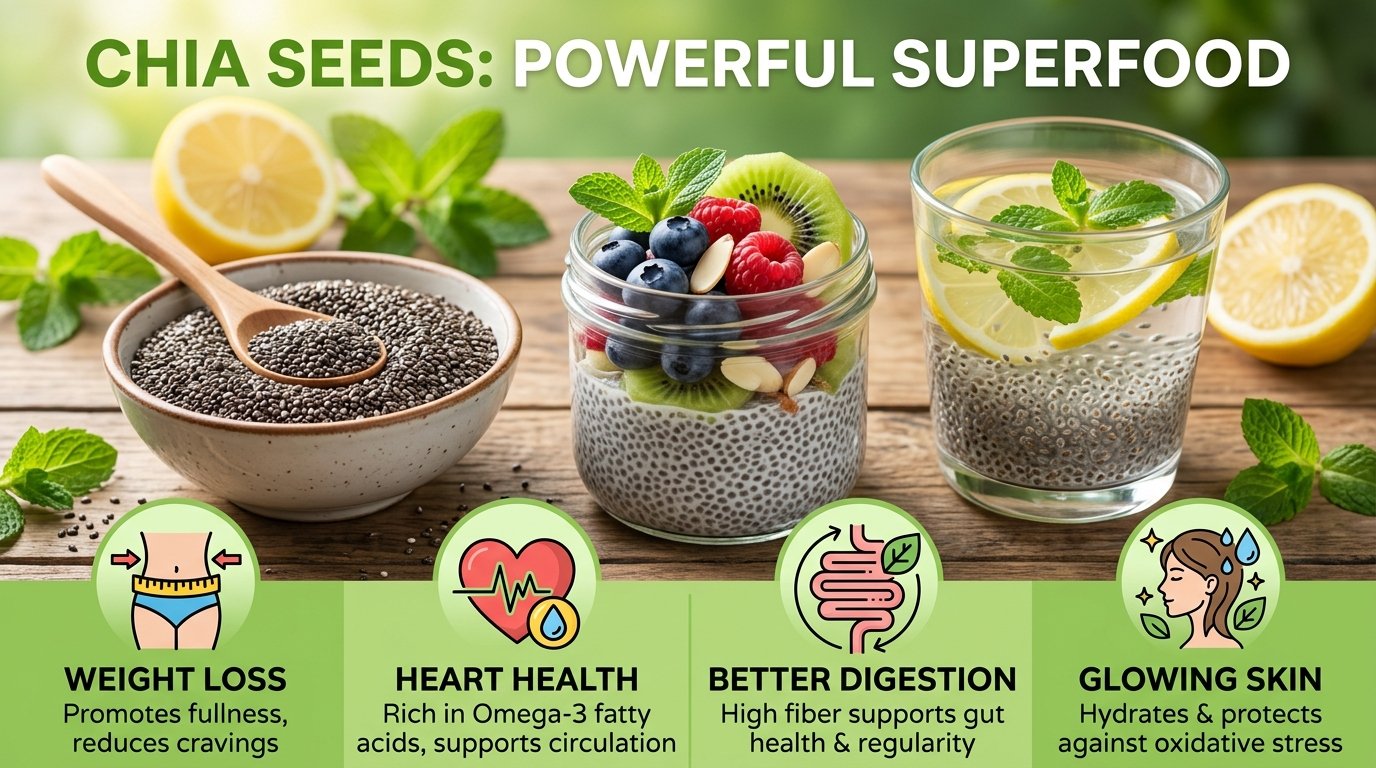
Chia seeds are frequently used in diets for weight loss because of their levels of fiber content. Fiber absorbs water, and then expands the stomach, allowing you to get fuller more often. Incorporating chia seeds into your food can help lower the amount of calories consumed and encourage healthier weight loss.
2. Heart Health Boost
The seeds are rich in omega-3 fats. Chia seeds help decrease inflammation as well as support cardiovascular health. Omega-3s are known to decrease good cholesterol, increase blood pressure, and improve general heart health.
3. Blood Sugar Regulation
Chia seeds may play a role in stabilizing blood sugar levels. They are rich in fiber and help to slow the process of absorbing sugar into bloodstreams which prevents sudden rises and drops in blood sugar levels. This can be particularly helpful for people who suffer from diabetes.
4. Digestive Health
Chia seeds are an excellent source of fiber, which aids digestion and encourages regular digestive motions. Incorporating them into your diet will help ease constipation as well as promote an overall healthy digestive system.
5. Skin Health
Because of their abundance of antioxidants, chia seeds can aid in improving the health of your skin. Antioxidants help fight damaging free radicals that could cause premature aging as well as damage to the skin. Consuming chia seeds regularly could help to maintain youthful and glowing skin.
6. Bone Health
Chia seeds are high in magnesium, calcium, and phosphorus. These are three essential minerals that strengthen bones. Including chia seeds in your diet could help preserve bone density and also prevent diseases such as osteoporosis.
7. Enhanced Energy Levels
Chia seeds are an excellent source of energy. That makes them a great supplement to your diet when you’re seeking to keep physically active throughout the day. Chia seeds provide a gradual and constant release of energy that can assist you in powering through your workouts and busy days.
8. Hydration Support
If chia seeds are immersed in water, they expand to make a gel-like substance. This is why they are an excellent ingredient in smoothies that are hydrating, since they can help hold in water and ensure that you stay well-hydrated.
9. Antioxidant Protection
Chia seeds are loaded with antioxidants, which protect your body from the effects of oxidative stress. The antioxidants help fight free radicals. These are dangerous molecules that cause damage to cells and lead to numerous health problems, such as heart disease and cancer.
10. Brain Function Support
Omega-3 fatty acids, as well as antioxidants in chia seeds, could assist in improving brain performance. The nutrients are linked to increased focus, memory and cognition, which makes chia seeds an ideal addition to a food regimen that helps boost brain power.
Common Uses of Chia Seeds
Chia seeds are extremely versatile and are a great addition to your everyday routine. Here are some ways of incorporating them into your food plan:
- Smoothies: Mix chia seeds in smoothies for added nutrition.
- Chia Pudding: Soak Chia seeds overnight in milk or as a dairy-free substitute to make an incredibly creamy and nutritious pudding.
- Salads: Sprinkle Chia seeds on salads to provide extra crunch and nutrients.
- Baked Goods: Chia seeds: Add in muffins, breads, or energy bars for a boost in their nutrient and fiber content.
- Water or tea, Chia seeds: Soak in tea or water to make a refreshing and well-hydrated drink.
Side Effects of Chia Seeds
Chia seeds can be suitable for the majority of people, they could create mild reactions for some people. They include:
- Digestive Problems: Consuming large quantities of chia seeds in one sitting can cause gastric bloating or stomach discomfort because of their high fiber.
- Allergic reactions. Although very rare, some people could be sensitive to the chia seed. If you notice symptoms that include swelling, itching, or breathing difficulties, stop usage and seek out a medical expert.
- interactions with medications. If you’re using blood pressure medications or blood thinners, consult your physician prior to consuming the chia seeds because they may affect the medications you are taking.
Similar to any supplement, you should begin with small amounts, then gradually increase it in order for your body to adapt.
How to Use Chia Seeds
Chia seeds can be eaten in various ways, which makes them easy to integrate into your daily routine. Here are a few simple suggestions about how you can use the seeds:
- Chia Drinking Water 1 tablespoon of chia seeds to the water in a glass for about 30 minutes. Consume this gel-like mix to hydrate and boost energy.
- Chia Pudding: Combine 2 teaspoons of Chia Seeds with one cup of milk, or an alternative that is dairy-free. It can be stored overnight in the refrigerator and produce a yummy and delicious pudding.
- For Smoothies Include one tablespoon of chia seeds in your smoothie to give it additional nutritional benefits.
- in Baked Goods, Chia seeds can be added to muffin or bread batters to increase the nutritional value of these seeds.
Who Should Avoid It / Precautions
Chia seeds can be used by most individuals; however, there are certain individuals who might require caution:
- pregnant or breastfeeding women. Chia seeds are usually considered to be safe; it’s an excellent idea to talk with an expert in your healthcare before introducing any new supplements into your daily diet when you are pregnant or nursing.
- Patients on blood Pressure or Blood Thinner medications. If you’re taking medication that alters the level of blood pressure and blood clotting, consult your physician prior to eating chia seeds.
- Children: Chia seeds are safe for kids in very small quantities. But it’s essential to be aware of digestive problems or allergies.
Buying and Storage Tips
If you are buying chia seeds, it’s crucial to pick an item of high-quality. Choose chia seeds that are non-GMO, organic, and free of added ingredients.
Chia seeds can be stored in a container. Place them in an airtight container that is kept in a cool and dry location. This helps preserve their freshness as well as stop them from going rancid. It is also possible to store the chia seeds in the fridge for a longer shelf life.
Here at PansariOnline.pk, we have premium-quality Chia seeds that can meet any health-related needs.
Conclusion
Chia seeds are an insignificant but powerful ingredient to add to your food regimen. With a high content of fiber, omega-3s and antioxidants, these seeds could aid in improving your heart health, aid in weight loss, and boost your performance levels. If you’re eating them in the form of a pudding, smoothie, or even as a treat, Chia seeds are an easy and efficient option to boost the overall health of your body.
If you’re planning to include the chia seeds in your daily routine, begin small and then increase it gradually. Be sure to speak with a health specialist if there are doubts about the use of chia seeds. Enjoy the benefits of Chia seeds and experience the improvement in your overall health!
FAQs Chia Seeds
1. What are chia seeds useful to use them for?
Chia seeds are loaded with omega-3 fatty acids, antioxidants, and fiber. aiding in losing weight and improving digestive functions.
2. May Chia seeds aid in losing weight?
Yes, chia seeds can aid in losing weight because of their fiber-rich content that promotes feeling full and decreases calories consumed.
3. What is the best way to drink Chia seeds?
Chia seeds can be added to salads, smoothies, or even used to create Chia Pudding. They are also possible to soak in water and added to baked items.
4. Are Chia seeds suitable for all?
Chia seeds are healthy for the majority of people. However, people taking blood pressure medicine or who suffer from allergies must talk to a doctor.
5. What amount of Chia seeds should I consume every day?
Chia seeds amount to about 1-2 tablespoons daily. Start small before gradually increasing your consumption.
6. Can chia seeds help lower blood sugar?
Chia seeds could help in regulating blood sugar levels thanks to their fiber content. This reduces sugar’s absorption into bloodstreams.
7. Do you know of any adverse effects of the chia seed?
There are people who experience digestive discomfort after eating excessive amounts of chia seeds. It is important to drink lots of fluids.
8. Can Chia seeds be used to treat skin?
Indeed, chia seeds contain antioxidants that will improve the health of your skin and help prevent premature aging.
9. Do chia seeds aid in hydration?
After being soaked in water, the chia seeds absorb liquids and form an emulsion-like substance, which helps to maintain your hydration.
10. What’s the best method to keep chia seeds safe?
Chia seeds can be stored in a sealed airtight container in an area that is dry and cool, and refrigerate them to ensure longer shelf lives.